{
"componentChunkName": "component---src-pages-slideshow-js",
"path": "/touchscreens/DL03/slideshow/112",
"result": {"data":{"strapiSlideshows":{"Slideshow":[{"Body":"**Rita Angus, Louise Henderson, Julia Scarvell** \n\n**March 2026–February 2027** \n**Te Ara Ātea** \n\nIn May 1936, seeking out Selwyn’s dramatic alpine landscape, artist friends Rita Angus, Louise Henderson and Julia Scarvell caught the train from Christchurch to Cass for a ten-day trip to paint, sketch and walk. This exhibition celebrates the art, science and history of the Cass Basin through the lens of this historic expedition. \n\nThe trip to Cass by the three friends reflects their intrepid and cost-effective approach to finding varied local landscapes to paint in a modern way. Taking advantage of the ease of rail travel and proximity of the rustic accommodation in the heart of the Cass Basin, Rita, Louise and Julia were enveloped in a dynamic alpine environment offering majestic views at every turn. It was a productive ten days, now seen as a ‘watershed moment in the history of New Zealand modernist painting’. Not every artwork they made on the trip survives (sadly none by Julia do), but at least ten were created, including Rita’s iconic painting *Cass*. \n","BodyMaori":null,"Credit":"Photograph by Michelle Sim","MediaCaption":"Rita Angus, *Cass*, 1936 (reproduction), installation view. \n>Original held in the collection of Christchurch Art Gallery Te Puna o Waiwhetū, purchased 1955. \n","Title":"Rita Angus: He Haereka ki Cass | A Trip to Cass","TitleMaori":null,"PlayIconStyle":null,"id":462,"Media":{"localFile":{"publicURL":"/static/946a1776438f3316fff4582d2f6834fb/Cass_slide_1_002dcb988a.jpg"},"mime":"image/jpeg"},"VideoPlaceholderImage":null},{"Body":"Within the rohe (territory) of Ngāi Tūāhuriri, the lakes, waterways and rich flora and fauna around the Cass Basin made it an abundant place within the ancient network of mahika kai (seasonal food and resource-gathering sites), noted for tuna (eel) and wildfowl. Kai was dried and stored outside on elevated stages (whata). This life-giving network across Te Waipounamu (the South Island) disappeared after the land came under Crown ownership in 1848. Ngāi Tahu were denied access to the land, which had a culturally catastrophic impact for the iwi. \n\nSince 1873 the University of Canterbury (then Canterbury College) has owned and used an area of land at Cass for the study of natural science, now a 1,775-hectare block known as the Cass Mountain Research Area. \n\n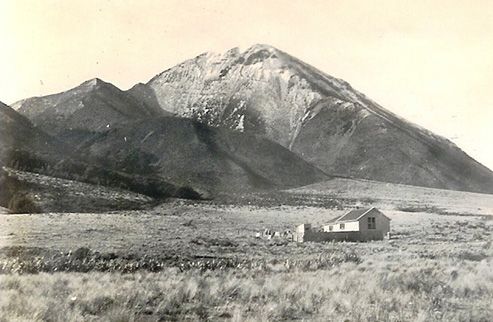 \n\nCass Field Station (c.1935) by Ellen Heine. \n>Courtesy of Te Kura Pūtaiao Koiora School of Biological Sciences, University of Canterbury.\n","BodyMaori":null,"Credit":"Reproduction, courtesy of Canterbury Museum","MediaCaption":"Whata depicted beside the Waimakariri river in *Camp, Banks of the Courtenay*, (Waimakariri) by Frederick Aloysius Weld (1850). ","Title":"The Landscape","TitleMaori":null,"PlayIconStyle":null,"id":463,"Media":{"localFile":{"publicURL":"/static/5b1ede189b988745c258f53ad85f1235/Cass_slide_2_30703f6493.jpg"},"mime":"image/jpeg"},"VideoPlaceholderImage":null},{"Body":"Rita, Louise and Julia had been friends for several years, meeting in the late 1920s at Canterbury College of Art. They were all pursuing artistic ambition at a time when women were expected to become married homemakers: making art for a living was viewed as an odd and risky career choice. Energised by the thriving art and cultural scene in Ōtautahi Christchurch, and actively travelling further afield, making art in nature, each of these independent-spirited friends would fulfil their creativity in their own way: Rita and Louise as accomplished artists, Julia as a dedicated teacher of art. \n\nThe three friends travelled to Cass by train, across the Canterbury Plains through 21 stops on the Midland Railway from Ōtautahi Christchurch. \n\n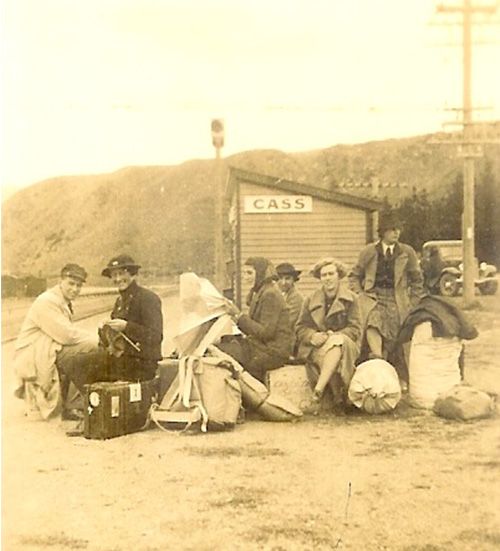 \n\nStudents outside Cass Station, photographed by Ellen Heine, c.1935. \n>Courtesy of Te Kura Pūtaiao Koiora School of Biological Sciences, University of Canterbury.\n","BodyMaori":null,"Credit":"Courtesy of New Zealand Department of Lands and Survey, National Library of New Zealand. \nPhotograph by Sam Towse ","MediaCaption":"Map of South Island, New Zealand, showing railway system, 1927 (reproduction), installation view. ","Title":"The Trip","TitleMaori":null,"PlayIconStyle":null,"id":464,"Media":{"localFile":{"publicURL":"/static/ddcbb5704becf82922b4ddf6ad88c255/Cass_slide_3_62942ca2aa.jpg"},"mime":"image/jpeg"},"VideoPlaceholderImage":null},{"Body":"Built in 1914 as the Canterbury College Mountain Biological Station, to house scientists gathering data in the area, the original Cass Field Station was simply a living room with a fireplace and two bunkrooms. A laboratory, bathroom and coal stove were added in 1929. This is how Rita, Louise and Julia found it when they arrived in 1936, without running water, electricity or a toilet. Rita painted the building on the trip, first making an initial sketch in oil, followed by a detailed watercolour made in her studio. She gifted the painting to thank the UC Professor of Biology, Edward Percival, for allowing the group to stay at the Field Station. Here the painting was enjoyed for many decades, hanging above the coal range. \n\n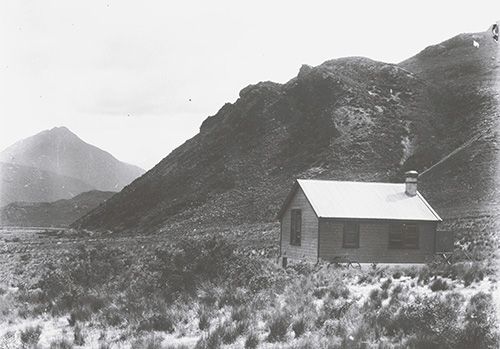 \n\nCanterbury College Mountain Biological Station c.1914 by C. E. Foweraker. \n>Courtesy of Macmillan Brown Library, University of Canterbury\n","BodyMaori":null,"Credit":"Courtesy of Macmillan Brown Library, University of Canterbury \n","MediaCaption":"Untitled [Mountain Biological Station, Cass] by Rita Angus (1936), collection of Macmillan Brown Library (reproduction).\n","Title":"The Cass Field Station","TitleMaori":null,"PlayIconStyle":null,"id":465,"Media":{"localFile":{"publicURL":"/static/ed1e4526497389a3665b02c4e5141f9f/Cass_slide_4_74d9267d27.jpg"},"mime":"image/jpeg"},"VideoPlaceholderImage":null},{"Body":"The exact dates of their art expedition (14-24 May 1936) were written in a leather-bound book used to record the Field Station visitors, who would collect the key from Cass postmistress and telephonist ‘Aunty Grace’ Robertshaw, after alighting at the railway station. 34-year-old Louise’s name is written as ‘Mrs H.H. Henderson’. She was a happily married mother to her only child, 3-year-old Diane, and her husband Hubert fully supported his wife’s painting career. Rita, 28, was separated from artist Alfred Cook, divorcing him in 1939 but using his surname until 1947. Julia, 32, never married. \n\n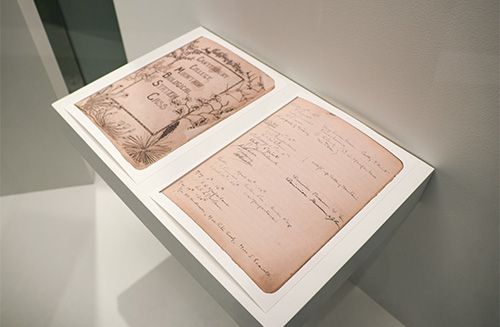 \n\nCanterbury College Mountain Biological Station guestbook, 1914–1965 (reproduction). Courtesy of the University of Canterbury Library Archives. \n>Photograph by Sam Towse\n\n","BodyMaori":null,"Credit":"Courtesy of University of Canterbury Library Archives\n","MediaCaption":"Canterbury College Mountain Biological Station, Guestbook (1914-1965), (detail). ","Title":"The Visitors’ Book","TitleMaori":null,"PlayIconStyle":null,"id":466,"Media":{"localFile":{"publicURL":"/static/0ab89c2a21a1a0a44e8005b694225784/Cass_slide_5_63ca9f2441.jpg"},"mime":"image/jpeg"},"VideoPlaceholderImage":null},{"Body":"Over 40,000 dried and pressed plants in the University of Canterbury (UC) Herbarium make up a botanical library that dates back over 150 years. \n\nUsed for teaching and research, the specimens are used to study plant evolution, identify new and taoka (taonga) species, create plant identification guides, and determine which plants are rare and endangered. \n\nBotany lecturer Charles Ethelbert Foweraker (1886 – 1964) made this specimen page at Cass in 1935. The ‘poison’ stamp means the specimen was preserved using mercuric chloride or napthalene, and the water damage is a result of a pipe bursting in the 2011 Canterbury earthquake. Foweraker is remembered for the kind way he encouraged the studies of young foresters and botanists, and for his skill as a photographer. \n\n\n","BodyMaori":"","Credit":"Courtesy of Te Kura Pūtaiao Koiora School of Biological Sciences, University of Canterbury","MediaCaption":"Specimen page of *Fuscospora cliffortioides* by C. E. Foweraker (1935). ","Title":"Specimen-collecting at Cass","TitleMaori":null,"PlayIconStyle":null,"id":467,"Media":{"localFile":{"publicURL":"/static/2a5fb81ffe3583739de375e6a4dec9c8/Cass_slide_6_712c7eaee0.jpg"},"mime":"image/jpeg"},"VideoPlaceholderImage":null},{"Body":"The Cass Field Station was a rare place of independence in nature for women: they visited from 1915 on scientific field trips organised by progressive botanist Dr. Charles Chilton and his wife Elizabeth (née Jack), pictured here with a group of women students in 1920. \n\nThis specimen page was made there by Joanna Hulsman, whose great-grand uncle Dr. Charles Chilton (1860-1929) was a founder of Cass Field Station. \n\nIt was a very special moment for me to photograph my sheets on the old table at Cass, knowing that Dr Chilton had sat at the very same, mulling over teachings of the botanical world! \n\nAlthough Chilton and his wife Elizabeth fostered adult education, especially for women, this was denied to his highly intelligent sister, Maude Chilton (1887-1946). She was obliged instead to housekeep for her two brothers before she married. Honoured to have had the education and freedom not granted to her great-grandmother Maude (and many other women of her generation), Joanna dedicates this specimen to her memory. \n\n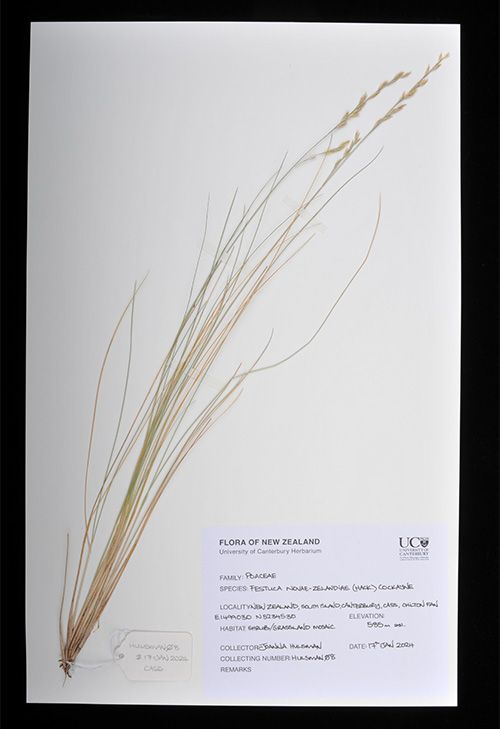 \n\nSpecimen page of *Festuca novae-zelandiae* by Joanna Hulsman in memory of Maude Chilton (2024). \n>Courtesy of Te Kura Pūtaiao Koiora School of Biological Sciences, University of Canterbury\n\n\n","BodyMaori":null,"Credit":"Courtesy of Alexander Turnbull Library","MediaCaption":"Dr Charles Chilton and students, Cass Biological Station, Canterbury, 1920. ","Title":"Women at Cass","TitleMaori":null,"PlayIconStyle":null,"id":468,"Media":{"localFile":{"publicURL":"/static/09fe76b77f353c2d32bb2720b0fb76d8/Cass_slide_7_959db6660d.jpg"},"mime":"image/jpeg"},"VideoPlaceholderImage":null},{"Body":" A short walk from the railway station, the Field Station’s site was chosen in 1910 when Cass was the end of the Midland line. Named after the colonial surveyor Thomas Cass (1817-1895), it was then a thriving township of around 800, with a school, a blacksmith, a drapery, a dining room, a police station and three stores. \n\nAs the railway reached Arthur’s Pass in 1914 and construction focused on the Ōtira tunnel, Cass became a ghost town. Just a few buildings remained by the time the artists arrived. Both Rita and Louise painted the dilapidated old library, built in 1883 as the office of the Upper Waimakariri Road Board, which folded in 1910 when Cass was incorporated into Tawera County. The library was also used as a place to dance as part of an evening at the adjacent Cass hotel, and later after the annual Cass Races held at the turn of the century. \n\n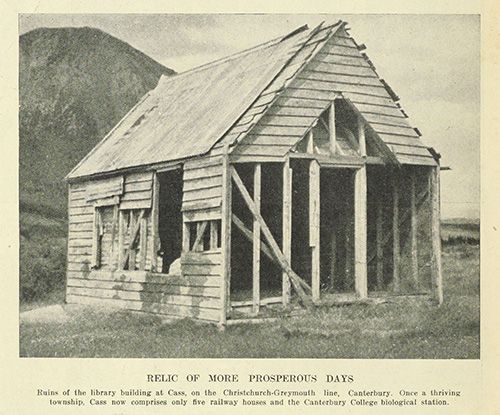 \n\nThe Old Library at Cass (1937). *Auckland Weekly News*. \n>Courtesy of Auckland Libraries Heritage Collections.\n","BodyMaori":null,"Credit":"On loan from the collection of Jolyon Swinburn, courtesy of the Louise Henderson Estate (later replaced with an unframed reproduction). \nPhotograph by Sam Towse\n","MediaCaption":"*Cass* (1936) by Louise Henderson (installation view). \n","Title":"The Old Library","TitleMaori":null,"PlayIconStyle":null,"id":469,"Media":{"localFile":{"publicURL":"/static/17919aace385851297b687bd6aeeb5e0/Cass_slide_8_a5d66b67bf.jpg"},"mime":"image/jpeg"},"VideoPlaceholderImage":null},{"Body":"Rita, Louise and Julia went to the mountains for new perspectives, a sense of freedom, and to spend time with friends in nature. Louise was looking for ‘solid forms…with strength, such as buildings and hills’, while Rita ‘wanted the mountains’. \n\nThe dynamic hard-edged way Rita painted them contrasted with the soft peaks depicted by earlier artists. The critic A. R. D. Fairburn, driving through the Cass Basin with poet Denis Glover, complained that the Southern Alps had historically been painted to ‘look like Sunday ice cream’, when he saw them as ‘great crouching tigers’. Both Rita and Louise recognised the post-glacial power of the mountains at Cass, each interpreting them in new ways with their own bold, colourful modernist style. \n\n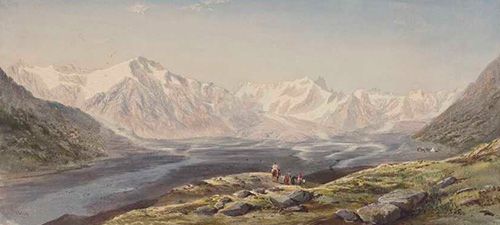 \n \nVictorian landscape artist John Gully painted the creamy snowy peaks of the Southern Alps in the European tradition, interpreting sketches of geologist and explorer Sir Julius von Haast, who founded Canterbury Museum. \n>John Gully, *Sources of Godley River, Classen and Godley Glaciers, 3550 feet* [1862]. Reproduced courtesy of the Alexander Turnbull Library\n\n","BodyMaori":null,"Credit":"(Left) Purchased 1977 with Mary Buick Bequest funds. Reproduced courtesy of the Estate of Rita Angus. Te Papa (1977-0012-1). (Right) Collection of Christchurch Art Gallery Te Puna o Waiwhetū , presented by Robert Erwin in memory of Lawrence Baigent, 1985. Photograph by Michelle Sim.","MediaCaption":"*Mountains, Cass*, 1936 studies by Rita Angus (reproductions), installation view.","Title":"Mountains","TitleMaori":null,"PlayIconStyle":null,"id":470,"Media":{"localFile":{"publicURL":"/static/a3b59f3be675e014c6272a72ca244d03/Cass_slide_9_66a39aa546.jpg"},"mime":"image/jpeg"},"VideoPlaceholderImage":null},{"Body":"Rita Angus (1908–1970) lived to paint. She came to Ōtautahi Christchurch in 1927 to study at Canterbury College School of Art, leaving without qualifying in 1930. Rita became a working artist and illustrator in the city, despite the challenges of the Great Depression, illness, and divorce. Her focus, disciplined independence and frugality meant that by 1938 she could leave commercial art to focus on her own practice over the next 30 years, developing a significant body of work with both national and global resonance that continues to inspire and delight. \n\nRita loved to travel for inspiration, finding a sense of freedom and perspective and solace with friends in nature, as well as a welcome change of scene. In 1936 she was a struggling freelance artist at a vulnerable time \"without home, hostel or marriage to protect me.\" \n\n“As a woman painter, I work to represent love of humanity and faith in mankind in a world, which is to me, richly variable and infinitely beautiful.” – Rita Angus, 1947 \n\n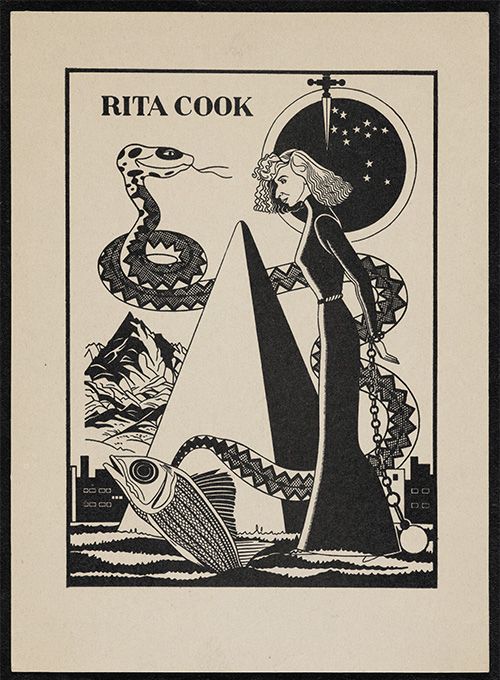 \n \nIn this 1937 bookplate, Rita depicted herself as a Piscean woman chained by convention in Ōtautahi Christchurch, under the Southern Cross within a broken wedding band. Threatened by a snake, representing man, a dagger is over her head, depicting ‘the curse of my being born an artist’. A pyramid contains ‘who I am and my power’, and her gaze is fixed on an alpine peak, showing the importance of the Southern Alps to her life and work. \n>Rita Cook. [Bookplate. 1937-1938]. Reproduced courtesy of Alexander Turnbull Library\n","BodyMaori":null,"Credit":"Courtesy of Te Papa","MediaCaption":"Rita Angus painting *Self portrait*, 1936-1937, photographed by Jean Bertram. ","Title":"Rita Angus","TitleMaori":null,"PlayIconStyle":null,"id":471,"Media":{"localFile":{"publicURL":"/static/f6a57760657ebceb164e9c1ad69db6f1/Cass_slide_10_be73733404.jpg"},"mime":"image/jpeg"},"VideoPlaceholderImage":null},{"Body":"Louise Henderson (née Sanze) (1902-1994) arrived in Ōtautahi Christchurch from Paris in 1925 dreaming of being a painter, against her mother’s wishes. Realising her vision, she produced vibrant landscapes on art trips across Waitaha Canterbury where she felt ‘divinely free and … deeply in love with this country’. ‘It was like opening the door for a bird to fly’. She also taught embroidery and design at Canterbury College School of Art from 1926–1941, and exhibited her work from the mid-1930s. Devoted to art across artforms, primarily painting, textiles and stained glass, she travelled internationally throughout her life, and in 1983 was the first New Zealand artist to be made a Dame. Acclaimed for her fearlessness, work ethic and powerful use of colour, Louise’s career spanned seven decades. \n \n“Louise…merged colours, overlapping them and creating movement in the most unexpected places. Each day in the studio was like seeing the mysteries of the universe revealed… Thin veils of colour overlapping and dancing with each other. She still takes my breath away…” – Karl Amundsen (*Bulletin*, Volume 221, 2025)\n\n\n \n\nLouise painted this image of Goldney’s Saddle at Cass while on the 1936 painting trip. \n>*Plain and Hills* by Louise Henderson (1936). Collection of Christchurch Art Gallery Te Puna o Waiwhetū (reproduction)\n","BodyMaori":null,"Credit":"Courtesy of Te Papa and the Frank Hofmann Estate","MediaCaption":"Louise Henderson, photographed in a playground park in Christchurch, by Frank Hofmann, 1941. ","Title":"Louise Henderson","TitleMaori":null,"PlayIconStyle":null,"id":472,"Media":{"localFile":{"publicURL":"/static/3805478164da87636e059d26e0fddc65/Cass_slide_11_b186d139ef.jpg"},"mime":"image/jpeg"},"VideoPlaceholderImage":null},{"Body":"Julia Scarvell (1904–1985) was known by generations of Canterbury women as a committed teacher of art. Born in Ōtautahi Christchurch and educated at Rangi Ruru school, she received a Diploma in Fine Art from Canterbury College School of Art in 1933, where she taught alongside Louise Henderson; both were needlework experts. By 1936 she was the art mistress at St Margaret’s College, later teaching at Christchurch then Timaru Girls’ High Schools (TGHS), fostering the creativity of young women across a wide range of mediums, including painting, ceramics, embroidery, and screen-printing. At TGHS from 1949–1960 Julia oversaw new art rooms, and introduced a curatorial role for students: ‘art librarians’ organised and hung exhibitions around the school, based on the School’s extensive art collection, which she developed throughout her 11 years there. \n\n“It is largely due to her assiduity and instruction that Art has been assured as an integral place in the life of many pupils, past and present, in this school.” – *Timaru Girls’ High School Chronicle*, November 1960 \n\n\n \n\nArt room display showing the range of artforms that Julia Scarvell taught, Timaru Girls’ High School, 1956. \n>Courtesy of Timaru Girls’ High School Archives\n","BodyMaori":null,"Credit":"Courtesy of the Clifford Collection, Canterbury Museum","MediaCaption":"Miss J. Scarvell (c. 1925) by H. H. Clifford.","Title":"Julia Scarvell","TitleMaori":null,"PlayIconStyle":null,"id":473,"Media":{"localFile":{"publicURL":"/static/a984e2f52e67bce3da32efd834e79451/Cass_slide_12_37b1cc6e5c.jpg"},"mime":"image/jpeg"},"VideoPlaceholderImage":null}],"Title":"DL03 Toi Arts 09 - Cass","id":"Slideshows_112","strapiId":112,"TimeoutOverrideSeconds":null}},"pageContext":{"id":"Slideshows_112","slideshowData":{"Slideshow":[{"Body":"**Rita Angus, Louise Henderson, Julia Scarvell** \n\n**March 2026–February 2027** \n**Te Ara Ātea** \n\nIn May 1936, seeking out Selwyn’s dramatic alpine landscape, artist friends Rita Angus, Louise Henderson and Julia Scarvell caught the train from Christchurch to Cass for a ten-day trip to paint, sketch and walk. This exhibition celebrates the art, science and history of the Cass Basin through the lens of this historic expedition. \n\nThe trip to Cass by the three friends reflects their intrepid and cost-effective approach to finding varied local landscapes to paint in a modern way. Taking advantage of the ease of rail travel and proximity of the rustic accommodation in the heart of the Cass Basin, Rita, Louise and Julia were enveloped in a dynamic alpine environment offering majestic views at every turn. It was a productive ten days, now seen as a ‘watershed moment in the history of New Zealand modernist painting’. Not every artwork they made on the trip survives (sadly none by Julia do), but at least ten were created, including Rita’s iconic painting *Cass*. \n","BodyMaori":null,"Credit":"Photograph by Michelle Sim","MediaCaption":"Rita Angus, *Cass*, 1936 (reproduction), installation view. \n>Original held in the collection of Christchurch Art Gallery Te Puna o Waiwhetū, purchased 1955. \n","Title":"Rita Angus: He Haereka ki Cass | A Trip to Cass","TitleMaori":null,"id":462,"PlayIconStyle":null,"Media":{"localFile":{"publicURL":"/static/946a1776438f3316fff4582d2f6834fb/Cass_slide_1_002dcb988a.jpg"},"mime":"image/jpeg"}},{"Body":"Within the rohe (territory) of Ngāi Tūāhuriri, the lakes, waterways and rich flora and fauna around the Cass Basin made it an abundant place within the ancient network of mahika kai (seasonal food and resource-gathering sites), noted for tuna (eel) and wildfowl. Kai was dried and stored outside on elevated stages (whata). This life-giving network across Te Waipounamu (the South Island) disappeared after the land came under Crown ownership in 1848. Ngāi Tahu were denied access to the land, which had a culturally catastrophic impact for the iwi. \n\nSince 1873 the University of Canterbury (then Canterbury College) has owned and used an area of land at Cass for the study of natural science, now a 1,775-hectare block known as the Cass Mountain Research Area. \n\n \n\nCass Field Station (c.1935) by Ellen Heine. \n>Courtesy of Te Kura Pūtaiao Koiora School of Biological Sciences, University of Canterbury.\n","BodyMaori":null,"Credit":"Reproduction, courtesy of Canterbury Museum","MediaCaption":"Whata depicted beside the Waimakariri river in *Camp, Banks of the Courtenay*, (Waimakariri) by Frederick Aloysius Weld (1850). ","Title":"The Landscape","TitleMaori":null,"id":463,"PlayIconStyle":null,"Media":{"localFile":{"publicURL":"/static/5b1ede189b988745c258f53ad85f1235/Cass_slide_2_30703f6493.jpg"},"mime":"image/jpeg"}},{"Body":"Rita, Louise and Julia had been friends for several years, meeting in the late 1920s at Canterbury College of Art. They were all pursuing artistic ambition at a time when women were expected to become married homemakers: making art for a living was viewed as an odd and risky career choice. Energised by the thriving art and cultural scene in Ōtautahi Christchurch, and actively travelling further afield, making art in nature, each of these independent-spirited friends would fulfil their creativity in their own way: Rita and Louise as accomplished artists, Julia as a dedicated teacher of art. \n\nThe three friends travelled to Cass by train, across the Canterbury Plains through 21 stops on the Midland Railway from Ōtautahi Christchurch. \n\n \n\nStudents outside Cass Station, photographed by Ellen Heine, c.1935. \n>Courtesy of Te Kura Pūtaiao Koiora School of Biological Sciences, University of Canterbury.\n","BodyMaori":null,"Credit":"Courtesy of New Zealand Department of Lands and Survey, National Library of New Zealand. \nPhotograph by Sam Towse ","MediaCaption":"Map of South Island, New Zealand, showing railway system, 1927 (reproduction), installation view. ","Title":"The Trip","TitleMaori":null,"id":464,"PlayIconStyle":null,"Media":{"localFile":{"publicURL":"/static/ddcbb5704becf82922b4ddf6ad88c255/Cass_slide_3_62942ca2aa.jpg"},"mime":"image/jpeg"}},{"Body":"Built in 1914 as the Canterbury College Mountain Biological Station, to house scientists gathering data in the area, the original Cass Field Station was simply a living room with a fireplace and two bunkrooms. A laboratory, bathroom and coal stove were added in 1929. This is how Rita, Louise and Julia found it when they arrived in 1936, without running water, electricity or a toilet. Rita painted the building on the trip, first making an initial sketch in oil, followed by a detailed watercolour made in her studio. She gifted the painting to thank the UC Professor of Biology, Edward Percival, for allowing the group to stay at the Field Station. Here the painting was enjoyed for many decades, hanging above the coal range. \n\n \n\nCanterbury College Mountain Biological Station c.1914 by C. E. Foweraker. \n>Courtesy of Macmillan Brown Library, University of Canterbury\n","BodyMaori":null,"Credit":"Courtesy of Macmillan Brown Library, University of Canterbury \n","MediaCaption":"Untitled [Mountain Biological Station, Cass] by Rita Angus (1936), collection of Macmillan Brown Library (reproduction).\n","Title":"The Cass Field Station","TitleMaori":null,"id":465,"PlayIconStyle":null,"Media":{"localFile":{"publicURL":"/static/ed1e4526497389a3665b02c4e5141f9f/Cass_slide_4_74d9267d27.jpg"},"mime":"image/jpeg"}},{"Body":"The exact dates of their art expedition (14-24 May 1936) were written in a leather-bound book used to record the Field Station visitors, who would collect the key from Cass postmistress and telephonist ‘Aunty Grace’ Robertshaw, after alighting at the railway station. 34-year-old Louise’s name is written as ‘Mrs H.H. Henderson’. She was a happily married mother to her only child, 3-year-old Diane, and her husband Hubert fully supported his wife’s painting career. Rita, 28, was separated from artist Alfred Cook, divorcing him in 1939 but using his surname until 1947. Julia, 32, never married. \n\n \n\nCanterbury College Mountain Biological Station guestbook, 1914–1965 (reproduction). Courtesy of the University of Canterbury Library Archives. \n>Photograph by Sam Towse\n\n","BodyMaori":null,"Credit":"Courtesy of University of Canterbury Library Archives\n","MediaCaption":"Canterbury College Mountain Biological Station, Guestbook (1914-1965), (detail). ","Title":"The Visitors’ Book","TitleMaori":null,"id":466,"PlayIconStyle":null,"Media":{"localFile":{"publicURL":"/static/0ab89c2a21a1a0a44e8005b694225784/Cass_slide_5_63ca9f2441.jpg"},"mime":"image/jpeg"}},{"Body":"Over 40,000 dried and pressed plants in the University of Canterbury (UC) Herbarium make up a botanical library that dates back over 150 years. \n\nUsed for teaching and research, the specimens are used to study plant evolution, identify new and taoka (taonga) species, create plant identification guides, and determine which plants are rare and endangered. \n\nBotany lecturer Charles Ethelbert Foweraker (1886 – 1964) made this specimen page at Cass in 1935. The ‘poison’ stamp means the specimen was preserved using mercuric chloride or napthalene, and the water damage is a result of a pipe bursting in the 2011 Canterbury earthquake. Foweraker is remembered for the kind way he encouraged the studies of young foresters and botanists, and for his skill as a photographer. \n\n\n","BodyMaori":"","Credit":"Courtesy of Te Kura Pūtaiao Koiora School of Biological Sciences, University of Canterbury","MediaCaption":"Specimen page of *Fuscospora cliffortioides* by C. E. Foweraker (1935). ","Title":"Specimen-collecting at Cass","TitleMaori":null,"id":467,"PlayIconStyle":null,"Media":{"localFile":{"publicURL":"/static/2a5fb81ffe3583739de375e6a4dec9c8/Cass_slide_6_712c7eaee0.jpg"},"mime":"image/jpeg"}},{"Body":"The Cass Field Station was a rare place of independence in nature for women: they visited from 1915 on scientific field trips organised by progressive botanist Dr. Charles Chilton and his wife Elizabeth (née Jack), pictured here with a group of women students in 1920. \n\nThis specimen page was made there by Joanna Hulsman, whose great-grand uncle Dr. Charles Chilton (1860-1929) was a founder of Cass Field Station. \n\nIt was a very special moment for me to photograph my sheets on the old table at Cass, knowing that Dr Chilton had sat at the very same, mulling over teachings of the botanical world! \n\nAlthough Chilton and his wife Elizabeth fostered adult education, especially for women, this was denied to his highly intelligent sister, Maude Chilton (1887-1946). She was obliged instead to housekeep for her two brothers before she married. Honoured to have had the education and freedom not granted to her great-grandmother Maude (and many other women of her generation), Joanna dedicates this specimen to her memory. \n\n \n\nSpecimen page of *Festuca novae-zelandiae* by Joanna Hulsman in memory of Maude Chilton (2024). \n>Courtesy of Te Kura Pūtaiao Koiora School of Biological Sciences, University of Canterbury\n\n\n","BodyMaori":null,"Credit":"Courtesy of Alexander Turnbull Library","MediaCaption":"Dr Charles Chilton and students, Cass Biological Station, Canterbury, 1920. ","Title":"Women at Cass","TitleMaori":null,"id":468,"PlayIconStyle":null,"Media":{"localFile":{"publicURL":"/static/09fe76b77f353c2d32bb2720b0fb76d8/Cass_slide_7_959db6660d.jpg"},"mime":"image/jpeg"}},{"Body":" A short walk from the railway station, the Field Station’s site was chosen in 1910 when Cass was the end of the Midland line. Named after the colonial surveyor Thomas Cass (1817-1895), it was then a thriving township of around 800, with a school, a blacksmith, a drapery, a dining room, a police station and three stores. \n\nAs the railway reached Arthur’s Pass in 1914 and construction focused on the Ōtira tunnel, Cass became a ghost town. Just a few buildings remained by the time the artists arrived. Both Rita and Louise painted the dilapidated old library, built in 1883 as the office of the Upper Waimakariri Road Board, which folded in 1910 when Cass was incorporated into Tawera County. The library was also used as a place to dance as part of an evening at the adjacent Cass hotel, and later after the annual Cass Races held at the turn of the century. \n\n \n\nThe Old Library at Cass (1937). *Auckland Weekly News*. \n>Courtesy of Auckland Libraries Heritage Collections.\n","BodyMaori":null,"Credit":"On loan from the collection of Jolyon Swinburn, courtesy of the Louise Henderson Estate (later replaced with an unframed reproduction). \nPhotograph by Sam Towse\n","MediaCaption":"*Cass* (1936) by Louise Henderson (installation view). \n","Title":"The Old Library","TitleMaori":null,"id":469,"PlayIconStyle":null,"Media":{"localFile":{"publicURL":"/static/17919aace385851297b687bd6aeeb5e0/Cass_slide_8_a5d66b67bf.jpg"},"mime":"image/jpeg"}},{"Body":"Rita, Louise and Julia went to the mountains for new perspectives, a sense of freedom, and to spend time with friends in nature. Louise was looking for ‘solid forms…with strength, such as buildings and hills’, while Rita ‘wanted the mountains’. \n\nThe dynamic hard-edged way Rita painted them contrasted with the soft peaks depicted by earlier artists. The critic A. R. D. Fairburn, driving through the Cass Basin with poet Denis Glover, complained that the Southern Alps had historically been painted to ‘look like Sunday ice cream’, when he saw them as ‘great crouching tigers’. Both Rita and Louise recognised the post-glacial power of the mountains at Cass, each interpreting them in new ways with their own bold, colourful modernist style. \n\n \n \nVictorian landscape artist John Gully painted the creamy snowy peaks of the Southern Alps in the European tradition, interpreting sketches of geologist and explorer Sir Julius von Haast, who founded Canterbury Museum. \n>John Gully, *Sources of Godley River, Classen and Godley Glaciers, 3550 feet* [1862]. Reproduced courtesy of the Alexander Turnbull Library\n\n","BodyMaori":null,"Credit":"(Left) Purchased 1977 with Mary Buick Bequest funds. Reproduced courtesy of the Estate of Rita Angus. Te Papa (1977-0012-1). (Right) Collection of Christchurch Art Gallery Te Puna o Waiwhetū , presented by Robert Erwin in memory of Lawrence Baigent, 1985. Photograph by Michelle Sim.","MediaCaption":"*Mountains, Cass*, 1936 studies by Rita Angus (reproductions), installation view.","Title":"Mountains","TitleMaori":null,"id":470,"PlayIconStyle":null,"Media":{"localFile":{"publicURL":"/static/a3b59f3be675e014c6272a72ca244d03/Cass_slide_9_66a39aa546.jpg"},"mime":"image/jpeg"}},{"Body":"Rita Angus (1908–1970) lived to paint. She came to Ōtautahi Christchurch in 1927 to study at Canterbury College School of Art, leaving without qualifying in 1930. Rita became a working artist and illustrator in the city, despite the challenges of the Great Depression, illness, and divorce. Her focus, disciplined independence and frugality meant that by 1938 she could leave commercial art to focus on her own practice over the next 30 years, developing a significant body of work with both national and global resonance that continues to inspire and delight. \n\nRita loved to travel for inspiration, finding a sense of freedom and perspective and solace with friends in nature, as well as a welcome change of scene. In 1936 she was a struggling freelance artist at a vulnerable time \"without home, hostel or marriage to protect me.\" \n\n“As a woman painter, I work to represent love of humanity and faith in mankind in a world, which is to me, richly variable and infinitely beautiful.” – Rita Angus, 1947 \n\n \n \nIn this 1937 bookplate, Rita depicted herself as a Piscean woman chained by convention in Ōtautahi Christchurch, under the Southern Cross within a broken wedding band. Threatened by a snake, representing man, a dagger is over her head, depicting ‘the curse of my being born an artist’. A pyramid contains ‘who I am and my power’, and her gaze is fixed on an alpine peak, showing the importance of the Southern Alps to her life and work. \n>Rita Cook. [Bookplate. 1937-1938]. Reproduced courtesy of Alexander Turnbull Library\n","BodyMaori":null,"Credit":"Courtesy of Te Papa","MediaCaption":"Rita Angus painting *Self portrait*, 1936-1937, photographed by Jean Bertram. ","Title":"Rita Angus","TitleMaori":null,"id":471,"PlayIconStyle":null,"Media":{"localFile":{"publicURL":"/static/f6a57760657ebceb164e9c1ad69db6f1/Cass_slide_10_be73733404.jpg"},"mime":"image/jpeg"}},{"Body":"Louise Henderson (née Sanze) (1902-1994) arrived in Ōtautahi Christchurch from Paris in 1925 dreaming of being a painter, against her mother’s wishes. Realising her vision, she produced vibrant landscapes on art trips across Waitaha Canterbury where she felt ‘divinely free and … deeply in love with this country’. ‘It was like opening the door for a bird to fly’. She also taught embroidery and design at Canterbury College School of Art from 1926–1941, and exhibited her work from the mid-1930s. Devoted to art across artforms, primarily painting, textiles and stained glass, she travelled internationally throughout her life, and in 1983 was the first New Zealand artist to be made a Dame. Acclaimed for her fearlessness, work ethic and powerful use of colour, Louise’s career spanned seven decades. \n \n“Louise…merged colours, overlapping them and creating movement in the most unexpected places. Each day in the studio was like seeing the mysteries of the universe revealed… Thin veils of colour overlapping and dancing with each other. She still takes my breath away…” – Karl Amundsen (*Bulletin*, Volume 221, 2025)\n\n\n \n\nLouise painted this image of Goldney’s Saddle at Cass while on the 1936 painting trip. \n>*Plain and Hills* by Louise Henderson (1936). Collection of Christchurch Art Gallery Te Puna o Waiwhetū (reproduction)\n","BodyMaori":null,"Credit":"Courtesy of Te Papa and the Frank Hofmann Estate","MediaCaption":"Louise Henderson, photographed in a playground park in Christchurch, by Frank Hofmann, 1941. ","Title":"Louise Henderson","TitleMaori":null,"id":472,"PlayIconStyle":null,"Media":{"localFile":{"publicURL":"/static/3805478164da87636e059d26e0fddc65/Cass_slide_11_b186d139ef.jpg"},"mime":"image/jpeg"}},{"Body":"Julia Scarvell (1904–1985) was known by generations of Canterbury women as a committed teacher of art. Born in Ōtautahi Christchurch and educated at Rangi Ruru school, she received a Diploma in Fine Art from Canterbury College School of Art in 1933, where she taught alongside Louise Henderson; both were needlework experts. By 1936 she was the art mistress at St Margaret’s College, later teaching at Christchurch then Timaru Girls’ High Schools (TGHS), fostering the creativity of young women across a wide range of mediums, including painting, ceramics, embroidery, and screen-printing. At TGHS from 1949–1960 Julia oversaw new art rooms, and introduced a curatorial role for students: ‘art librarians’ organised and hung exhibitions around the school, based on the School’s extensive art collection, which she developed throughout her 11 years there. \n\n“It is largely due to her assiduity and instruction that Art has been assured as an integral place in the life of many pupils, past and present, in this school.” – *Timaru Girls’ High School Chronicle*, November 1960 \n\n\n \n\nArt room display showing the range of artforms that Julia Scarvell taught, Timaru Girls’ High School, 1956. \n>Courtesy of Timaru Girls’ High School Archives\n","BodyMaori":null,"Credit":"Courtesy of the Clifford Collection, Canterbury Museum","MediaCaption":"Miss J. Scarvell (c. 1925) by H. H. Clifford.","Title":"Julia Scarvell","TitleMaori":null,"id":473,"PlayIconStyle":null,"Media":{"localFile":{"publicURL":"/static/a984e2f52e67bce3da32efd834e79451/Cass_slide_12_37b1cc6e5c.jpg"},"mime":"image/jpeg"}}],"Title":"DL03 Toi Arts 09 - Cass","id":"Slideshows_112","strapiId":112},"homePath":"/touchscreens/DL03","backPath":"/touchscreens/DL03/menu/26","title":"DIGITAL LABEL 03
Digital Label Title 03","showLanguageButtons":null,"styles":"html,body {\n font-family: Gotham;\n height: 100%;\n margin: 0px;\n padding: 0px;\n}\n\n* {\n -webkit-user-select: none;\n -khtml-user-select: none;\n -moz-user-select: none;\n -o-user-select: none;\n user-select: none;\n}\n\nh1 {\n color: #231f20;\n margin: -20px 0 0 0;\n font-family: 'IndustryIncInline';\n font-size: 80px;\n text-transform: uppercase;\n}\n\nh3 {\n color: #231f20;\n font-size: 12px;\n text-transform: uppercase;\n line-height: 2em;\n}\n\nh3.subpage-touchscreen-title {\n font-family: 'DIN2014';\n font-size: 20px;\n text-transform: uppercase;\n margin-top: -18px;\n}\n\na {\n text-decoration: none;\n}\n\n.menu-page-icon-container h1, .touchscreen-menu-items-container h1 {\n width: 900px;\n min-height: 2em;\n}\n\n.menu-page-icon-container.with-sidebar h1 {\n width: auto !important;\n}\n\n.page-container {\n margin: 0;\n padding: 70px 100px 0;\n position: relative;\n height: 100%;\n background: #ebebeb;\n}\n\nmain {\n width: 1920px;\n height: 1080px;\n}\n\n.hidden {\n display: none;\n}\n\n.nav {\n position: absolute;\n top: 60px;\n left: 0;\n z-index: 999;\n}\n\n.nav div, .nav a {\n display: block;\n width: 80px;\n height: 80px;\n float: left;\n}\n\n.nav .home {\n background: url(\"/SVG/Buttons/btn_home_light.svg\");\n}\n\n.nav .back {\n background: url(\"/SVG/Buttons/btn_arrow_prev.svg\");\n}\n\n.zoom-btn, .zoom-btn-fixed {\n display: block;\n width: 80px;\n height: 80px;\n position: absolute;\n top: 60px;\n right: 0;\n z-index: 999;\n background: url(\"/SVG/Buttons/btn_zoom_light.svg\");\n}\n\n.zoom-btn-fixed {\n right: 576px;\n}\n\n.play-btn {\n display: block;\n width: 80px;\n height: 80px;\n position: absolute;\n top: 50%;\n right: 50%;\n z-index: 999;\n background: url(\"/SVG/Buttons/btn_play.svg\");\n margin-right: -40px;\n margin-top: -40px;\n}\n\n.play-btn-audio {\n display: block;\n width: 80px;\n height: 80px;\n position: absolute;\n z-index: 999;\n background: url(\"/SVG/Buttons/btn_Audio.svg\");\n}\n\n.fancybox-button--close, .fancybox-close-small {\n position: fixed !important;\n width: 80px !important;\n height: 80px !important;\n background: url(\"/SVG/Buttons/btn_close.svg\") !important;\n}\n\n.fancybox-button--close svg, .fancybox-close-small svg {\n display: none !important;\n}\n\n.fancybox-button--zoom {\n display: none !important;\n}\n\n.fancybox-toolbar {\n width: 80px;\n}\n\n.video-js {\n background-color: #212121 !important;\n}\n\n.bg-div {\n background-size: cover !important;\n}\n\n.bg-video {\n position: fixed;\n right: 0;\n bottom: 0;\n min-width: 100%;\n min-height: 100%;\n z-index: 1;\n transition: 1s;\n}\n\n.halfFade {\n opacity: 0.2;\n}\n\n.touchscreen-page {\n background-color: #ebebeb00;\n}\n\n.touchscreen-page .nav {\n opacity: 0;\n transition: 1s;\n}\n\n.fadeIn {\n opacity: 1 !important;\n}\n\n.touchscreen-menu-items-container {\n transition: 1s;\n position: absolute;\n left: 1920px;\n top: 0;\n width: 1920px;\n height: 1080px;\n z-index: 100;\n}\n\n.touchscreen-menu-items-container-slide-in {\n left: 0;\n}\n\n.touchscreen-menu-items {\n z-index: 100;\n position: relative;\n width: 1720px;\n text-align: center;\n}\n\n.touchscreen-menu-items a {\n width: 600px;\n height: 600px;\n max-width: 600px;\n max-height: 600px;\n display: inline-block;\n margin: 90px 4px 0;\n}\n\n.touchscreen-menu-items a img {\n max-width: 600px;\n max-height: 600px;\n filter: grayscale(100%);\n}\n\n.touchscreen-menu-items a p {\n text-transform: uppercase;\n margin: 0;\n font-family: \"DIN2014\";\n width: 600px;\n padding: 10px;\n color: #231f20;\n white-space: nowrap;\n position: absolute;\n bottom: 0px;\n background-color: rgba(208, 210, 211, 0.8);\n height: 50px;\n text-align: left;\n bottom: 3px;\n}\n\n.touchscreen-text {\n transition: 1s;\n position: relative;\n left: 0;\n z-index: 100;\n}\n\n.touchscreen-text-slide-out {\n left: -1920px;\n}\n\n.touchscreen-text h1 {\n font-size: 160px;\n margin: 0;\n}\n\n.touchscreen-text h3 {\n font-size: 32px;\n font-weight: 200;\n padding-left: 20px;\n}\n\n.menu-page-items {\n height: 760px;\n position: relative;\n}\n\n.with-sidebar .menu-page-items {\n height: 870px !important;\n}\n\n.vertical-align {\n/* Center slide text vertically */\n \n\n\n display: -webkit-box;\n display: -ms-flexbox;\n display: -webkit-flex;\n display: flex;\n -webkit-box-pack: center;\n -ms-flex-pack: center;\n -webkit-justify-content: center;\n justify-content: center;\n -webkit-box-align: center;\n -ms-flex-align: center;\n -webkit-align-items: center;\n align-items: center;\n}\n\n.menu-page-infobox {\n display: none;\n}\n\n.menu-page-icon-container {\n color: #fff;\n width: 1820px;\n}\n\n.with-sidebar .menu-page-items-container {\n width: 1244px !important;\n}\n\n.menu-page-sidebar .swiper-zoom-container {\n position: relative;\n}\n\n.menu-page-sidebar .play-btn {\n left: auto !important;\n top: auto !important;\n right: auto !important;\n}\n\n.menu_item {\n position: relative;\n float: left;\n min-height: 1px;\n width: 340px;\n margin: 5px;\n}\n\n.menu_item img {\n filter: sepia(0) grayscale(100%);\n transition: .3s ease-in-out;\n display: block;\n width: 100%;\n max-width: none;\n height: 100%;\n object-fit: cover;\n}\n\n.menu_item p {\n text-transform: uppercase;\n margin: 0;\n font-family: \"DIN2014\";\n width: 100%;\n padding: 10px;\n color: #231f20;\n white-space: nowrap;\n position: absolute;\n bottom: 0;\n background-color: rgba(208, 210, 211, 0.9);\n min-height: 50px;\n}\n\n.menu_item.active p {\n background-color: rgba(255, 255, 255, 0.9);\n}\n\n.menu_item.active img {\n filter: sepia(75%) grayscale(0) !important;\n}\n\n.menu-page-icon-container.with-sidebar .menu_item {\n width: 270px;\n}\n\n.menu-page-icon-container {\n width: auto;\n}\n\n.main-slide {\n width: 100%;\n height: 100%;\n}\n\n.main-slide img {\n max-width: 80% !important;\n max-height: 910px !important;\n box-shadow: 3px 2px 20px 0px rgba(0, 0, 0, 0.2);\n}\n\n.video-fullscreen {\n width: 1820px;\n background: transparent !important;\n}\n\n.swiper-container {\n margin: 0 !important;\n background: rgb(235, 235, 235);\n}\n\n.swiper-main {\n width: 70%;\n height: 88%;\n position: absolute;\n left: 0px;\n top: 0;\n}\n\n.vjs-tech {\n pointer-events: none;\n}\n\n\n\n/* .fancybox-bg {background:lightgrey !important;} */\n\n\n\n.swiper-infobox {\n width: 30%;\n height: 100%;\n position: absolute !important;\n right: 0;\n top: 0;\n}\n\n.swiper-infobox .infobox h3 {\n margin-top: 200px;\n font-size: 32px;\n font-family: \"DIN2014\";\n letter-spacing: 0.1em;\n line-height: 1em;\n}\n\n.swiper-infobox .infobox {\n max-width: 410px;\n margin-left: 30px;\n font-weight: 100;\n}\n\n.swiper-infobox .infobox img {\n width: 100%;\n}\n\n.swiper-infobox .infobox .text {\n height: 590px;\n overflow: auto;\n padding-right: 10px;\n}\n\n.menu-page-sidebar .text {\n height: 860px !important;\n ;\n}\n\n::-webkit-scrollbar {\n width: 5px;\n height: 5px;\n}\n\n::-webkit-scrollbar-track {\n background: rgba(0, 0, 0, 0.1);\n}\n\n::-webkit-scrollbar-thumb {\n background: rgba(0, 0, 0, 0.5);\n}\n\n.swiper-scrollbar {\n height: 6px;\n}\n\n.swiper-caption {\n width: 70%;\n height: 12%;\n position: absolute;\n left: 0px;\n bottom: 0px;\n}\n\n.swiper-caption .caption {\n position: absolute;\n left: 30px;\n top: 10px;\n font-weight: 200;\n text-align: left;\n font-size: 14px;\n max-width: 650px;\n line-height: 1;\n}\n.swiper-caption .credit {\n position: absolute;\n left: 30px;\n top: 60px;\n}\nblockquote, .swiper-caption .credit {\n font-weight: 100;\n ;\n text-align: left;\n font-size: 12px;\n max-width: 650px;\n line-height: 1;\n}\nblockquote {margin: 0 !important;}\n\n.swiper-scrollbar {\n border-radius: 10px;\n position: relative;\n -ms-touch-action: none;\n background: rgba(0, 0, 0, .1);\n}\n\n.swiper-container > .swiper-scrollbar {\n top: 0 !important;\n position: absolute;\n left: 1%;\n bottom: 3px;\n z-index: 50;\n height: 5px;\n width: 98%;\n}\n\n.main-slide {\n text-align: center;\n font-size: 18px;\n background: rgb(235, 235, 235);\n/* Center slide text vertically */\n \n\n\n display: -webkit-box;\n display: -ms-flexbox;\n display: -webkit-flex;\n display: flex;\n -webkit-box-pack: center;\n -ms-flex-pack: center;\n -webkit-justify-content: center;\n justify-content: center;\n -webkit-box-align: center;\n -ms-flex-align: center;\n -webkit-align-items: center;\n align-items: center;\n}\n\n.main-slide .media {\n width: 100%;\n max-height: 910px;\n}\n\n.swiper-button-prev {\n background: url(\"/SVG/Buttons/btn_arrow_prev.svg\");\n left: auto !important;\n right: 81px !important;\n}\n\n.swiper-button-next {\n background: url(\"/SVG/Buttons/btn_arrow_next.svg\");\n right: 0 !important;\n}\n\n.swiper-button-prev, .swiper-button-next {\n width: 80px !important;\n height: 80px !important;\n font-weight: bold;\n position: absolute !important;\n top: 30px !important;\n}\n\n.swiper-button-prev:after, .swiper-button-next:after {\n content: \"\" !important;\n}\n\n.swiper-pagination-fraction {\n font-family: 'IndustryIncInline';\n left: 30px !important;\n bottom: 50px !important;\n text-align: left !important;\n font-size: 50px;\n}\n\n.my-shuffle {\n position: relative;\n overflow: hidden;\n top: 20px;\n/* padding-bottom:100%; */\n \n}\n\n\n/* default styles so shuffle doesn't have to set them (it will if they're missing) */\n.my-shuffle {\n position: relative;\n overflow: hidden;\n}\n\n/* Ensure images take up the same space when they load */\n/* https://vestride.github.io/Shuffle/images */\n.aspect {\n position: relative;\n width: 100%;\n height: 0;\n padding-bottom: 100%;\n overflow: hidden;\n}\n\n.aspect__inner {\n position: absolute;\n top: 0;\n right: 0;\n bottom: 0;\n left: 0;\n}\n\n\n/* img {\n display: block;\n width: 100%;\n max-width: none;\n height: 100%;\n object-fit: cover;\n} */\n\n/* Small reset */\n\n*,\n::before,\n::after {\n box-sizing: border-box;\n}\n\nfigure {\n margin: 0;\n padding: 0;\n}\n\n.menu-page-items-container {\n overflow-x: auto;\n}\n\n.fancybox-toolbar {\n visibility: visible !important;\n opacity: 1.0 !important;\n}\n\nvideo::-webkit-media-controls-overlay-play-button,\nvideo::-webkit-media-controls-volume-slider-container,\nvideo::-webkit-media-controls-mute-button,\nvideo::-webkit-media-controls-volume-slider,\nvideo::-webkit-media-controls-fullscreen-button,\nvideo::-webkit-media-controls-play-button,\nvideo::-webkit-media-controls-pausebutton {\n display: none;\n}\n\n.menu-page-20 .menu_item {\n width: 600px;\n}\n\n\n.menu-page-20 .menu-page-items {\n width: 1500px !important;\n position: absolute;\n top: 275px;\n left: 350px;\n}\n\n.menu-page-23 .menu_item {\n width: 600px;\n}\n\n\n.menu-page-23 .menu-page-items {\n width: 1500px !important;\n position: absolute;\n top: 275px;\n left: 350px;\n}\n\n.menu-page-15 .menu-page-items-container {\n overflow-x: auto;\n position: absolute;\n top: 180px;\n}\n\n.menu-page-19 .menu-page-items-container {\n overflow-x: auto;\n position: absolute;\n top: 180px;\n}\n\n.menu-page-20 .grid-icon-size.without-sidebar, .menu-page-20 .without-sidebar .grid-icon {\n height: 600px;\n width: 600px;\n max-width: 600px;\n}\n\n.menu-page-23 .grid-icon-size.without-sidebar, .menu-page-23 .without-sidebar .grid-icon {\n height: 600px;\n width: 600px;\n max-width: 600px;\n}\n\n.grid-icon-size, .grid-icon {margin-right:10px;margin-top:10px;transition: width 0.5s ease-in-out;overflow:hidden;height:250px;width:250px;max-width:250px;position:relative;float:left;}\n.grid-icon-size.without-sidebar, .without-sidebar .grid-icon {height:250px;width:250px;max-width:250px;}\n.grid-icon-size.with-sidebar, .with-sidebar .grid-icon {height:270px;width:270px;max-width:270px;}\n.grid-icon img {transition: filter 0.5s ease-in-out; filter: sepia(0) grayscale(0%);width:100%;}\n.grid-icon img.highlight {filter: sepia(0) grayscale(100%);}\n.grid-icon p {text-transform: uppercase;margin: 0;font-family: 'DIN2014';width: 100%;padding: 10px;color: #231f20;white-space: nowrap;position: absolute;bottom: 0;background-color: rgba(208, 210, 211, 0.9);min-height: 50px;transition: opacity 0.25s ease-in-out;opacity:1;bottom:0;position:absolute;}\n.grid-icon.hidden-icon {width:0;margin:0;}\n.grid-icon.hidden-icon p {opacity:0;}\nbody {width: 1920px;height: 1080px;overflow: hidden;}\n\n.buttons-language {top:60px;right:0;position:fixed;z-index:99999999;font-size:18pt;}\n.buttons-language a {display:inline-block;width:180px;background-color:#b7b7b7;#color:#000;line-height:80px;text-align:center;}\n.buttons-language a.active {background-color:#000000;color:#cfcfce;}\n\n\n.tags-container {\n position: fixed;\n right: 0;\n top: 0;\n width: 300px;\n height: 100%;\n backgroundColor: #ebebeb; \n}\n\n.with-sidebar .tags-container {\n right: 530px !important;\n}\n\n.tags {\n position: absolute;\n top: 50%;\n left: 50%;\n transform: translate(-50%, -50%);\n color: #231f20;\n margin: 0;\n text-align: right;\n margin-right: 70px;\n}\n\n.tags a {\n font-family: \"DIN2014\";\n text-transform: uppercase;\n line-height: 20px;\n display: block;\n padding: 0 10px;\n margin: 30px 0;\n text-align: center;\n font-size: 15px; \n}\n\n.tags a:last-child {\n margin-right: 0;\n}\n\n.tags a.active {\n border-bottom: 1px solid #231f20;\n}\n\n\n\n/* Tedds rubbish starts here*/\n\n\n.touchscreen-text h1 {\n font-size: 72px;\n color: #ffffff;\n}\n\nh1 {\n color: #231f20;\n margin: -20px 0 0 0;\n font-family: 'Atlas Grotesk';\n font-size: 80px;\n}\n\n.touchscreen-text {\n transition: 1s;\n position: relative;\n left: 0;\n top: 400px;\n z-index: 100;\n}\n.touchscreen-text h3 {\n font-size: 36px;\n font-weight: 300;\n color: white;\n padding-left: 0px;\n position: fixed;\n}\n\nh3 {\n color: #231f20;\n font-size: 12px;\n text-transform: uppercase;\n line-height: 2em;\n font-family: 'Atlas Grotesk';\n}\n\nhtml, body {\n font-family: 'Atlas Grotesk';\n}\n\nh1 {\n color: #231f20;\n margin: 2px 0 0 0;\n font-family: 'Atlas Grotesk';\n font-size: 48px;\n font-weight: 500;\n}\n\n.tags-container {\n position: fixed;\n right: 0;\n top: 0;\n width: 360px;\n height: 100%;\n backgroundColor: #ebebeb;\n}\n\n.tags {\n position: absolute;\n top: 50%;\n left: 50%;\n transform: translate(-50%, -50%);\n color: #231f20;\n margin: 0;\n text-align: right;\n margin-right: 0px;\n}\n\n.swiper-infobox .infobox h3 {\n margin-top: 200px;\n font-size: 32px;\n font-family: \"Atlas Grotesk\";\n letter-spacing: 0.1em;\n line-height: 1em;\n}\n\n.swiper-caption .caption {\n position: absolute;\n left: 30px;\n top: 10px;\n font-weight: 300;\n text-align: left;\n font-size: 14px;\n max-width: 650px;\n line-height: 1;\n}\n\n.swiper-pagination-fraction {\n font-family: 'Atlas Grotesk';\n left: 360px !important;\n bottom: 30px !important;\n text-align: left !important;\n font-size: 60px;\n font-weight: 800;\n color: #00000033;\n}\n\n\n.grid-icon p {\n text-transform: uppercase;\n margin: 0;\n font-family: 'Atlas Grotesk';\n font-size: 14px;\n width: 100%;\n padding: 10px;\n color: #231f20;\n white-space: normal;\n position: absolute;\n bottom: 0;\n background-color: rgba(208, 210, 211, 0.9);\n min-height: 50px;\n transition: opacity 0.25s ease-in-out;\n opacity: 1;\n bottom: 0;\n position: absolute;\n}\n\n.touchscreen-text h1 {\n font-size: 72px;\n display: none;\n color: #ffffff;\n}\n\n.touchscreen-pageDL01 .touchscreen-text h3 {\n font-size: 36px;\n font-weight: 300;\n color: black;\n padding-left: 0px;\n}\n\n.touchscreen-pageDL03 .touchscreen-text h3 {\n font-size: 36px;\n font-weight: 300;\n color: black;\n padding-left: 0px;\n}\n\n\n.menu-page-icon-container h1, .touchscreen-menu-items-container h1 {\n width: 900px;\n min-height: 2em;\n margin-bottom: 60px;\n}\n\n.page-container {\n margin: 0;\n padding: 52px 100px 0;\n position: relative;\n height: 100%;\n background: #ebebeb;\n}\n\n\n\n.menu-page-items-container {\n margin-top: 300px;\n overflow-x: auto;\n width: 1300px !important;\n height: 560px;\n overflow-y: hidden;\n}\n\nh5 {\n font-family: 'Atlas Grotesk';\nfont-weight: 350;\n font-size: 85%;\nmargin-top: 10px;\nmargin-bottom: 10px;\n}\n"}},
"staticQueryHashes": []}