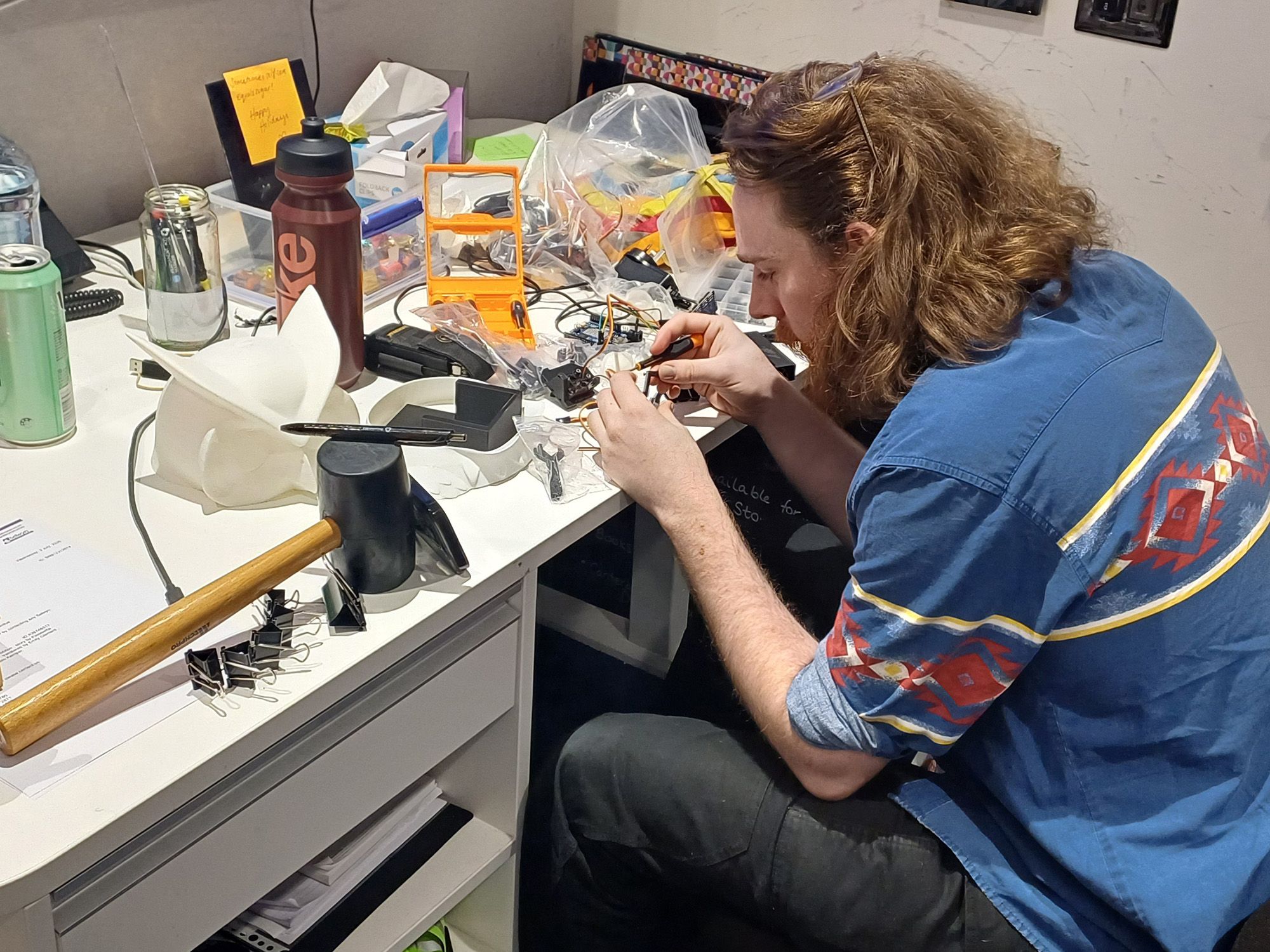
Calum working on the electronics for the owl’s animatronic eyes

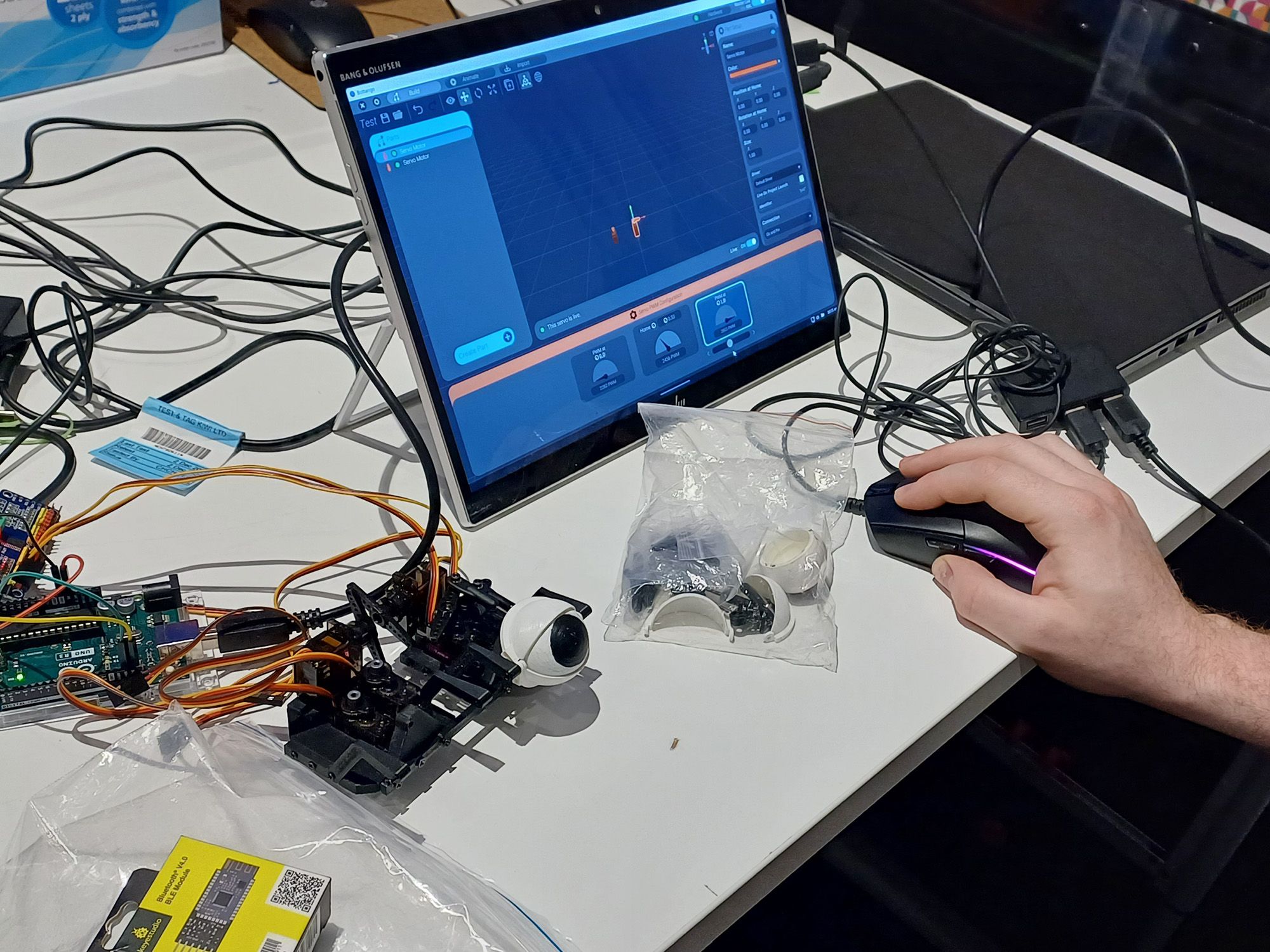
Testing out the Bottango code to make the eyeballs move

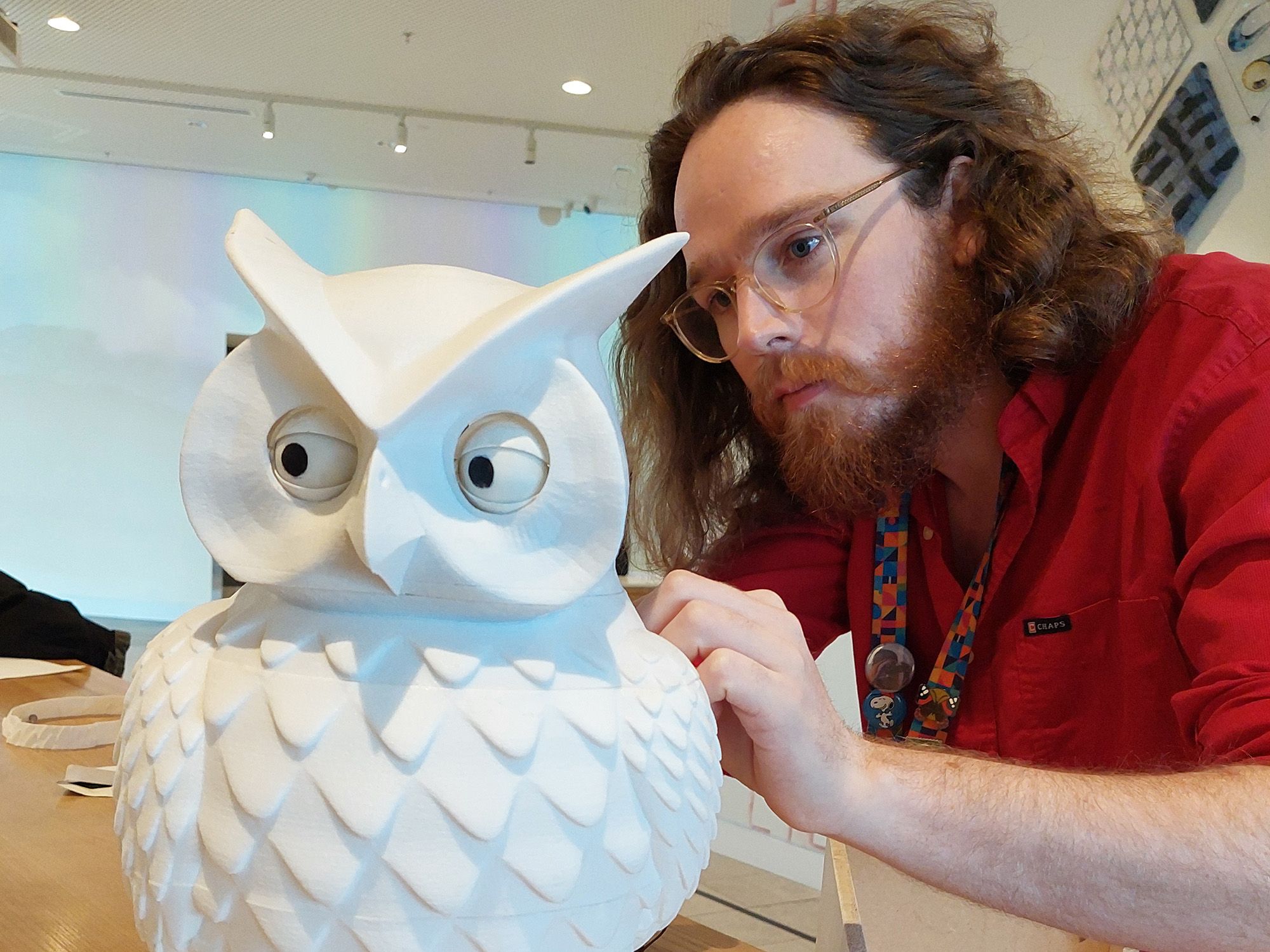
Calum testing the owl’s eye movement

Calum’s Animatronic Owl

This project combines 3D modelling, mechanical design, and coding to bring a static model to life through movement and interactivity. The owl was modified in Blender to include an animatronic eye mechanism, which adds a layer of realism and personality to the model. The mechanism is mostly 3D printed and powered by SG90S servos which are small motors that, when given a signal, move to a set angle, controlled by an ESP32 microcontroller.

Animation was created using Bottango software, which simplifies motion creation through its user-friendly interface. To keep the display battery efficient, the owl enters a sleep mode when inactive. The power system and programming were designed to support low-energy operation, allowing the owl to “wake up” at intervals without draining the battery. The code for power saving was developed with help from my wise friend Jake.


On display

Animatronic owl, designed and printed by Calum Lyall at Selwyn Libraries. This item is displayed on a wooden stand generously provided by the Rolleston Men’s Shed.
Cracking the code

This photo shows the programming and testing stage for the animatronic movement. Using servos, wiring, and an Arduino board, which acts as the brain of the electronics and reacts to signals by performing programmed actions, the eye mechanism is then controlled through Bottango software. Each movement required precise calibration, transforming a pile of electronic of electronics into expressive, responsive components ready to be fitted inside the owl.

This stage came with its share of challenges and learning, as Bottango software wasn’t easily compatible with the Arduino board we initially purchased. This required the combined effort of some talented coders to solve, to whom I’d like to extend my thanks.

What’s inside?

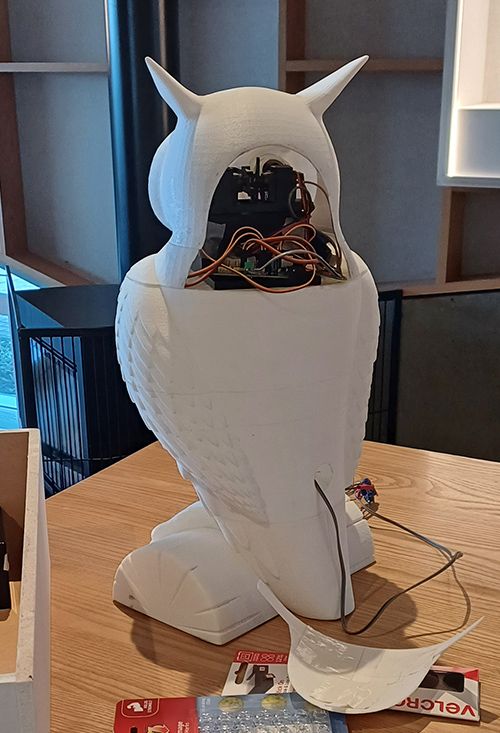
Inside the owl’s hollow shell, you can see the hidden servos and wiring powering the subtle eye movements. The project required very precise printing to ensure all the electronics would fit correctly within the owl. This view does a great job of reinforcing the amount of technical thinking that was required to instil the fun motion that brings an otherwise static object to life.

1.3 supporting 2.jpg

Printed feathers, powered by hidden robotics