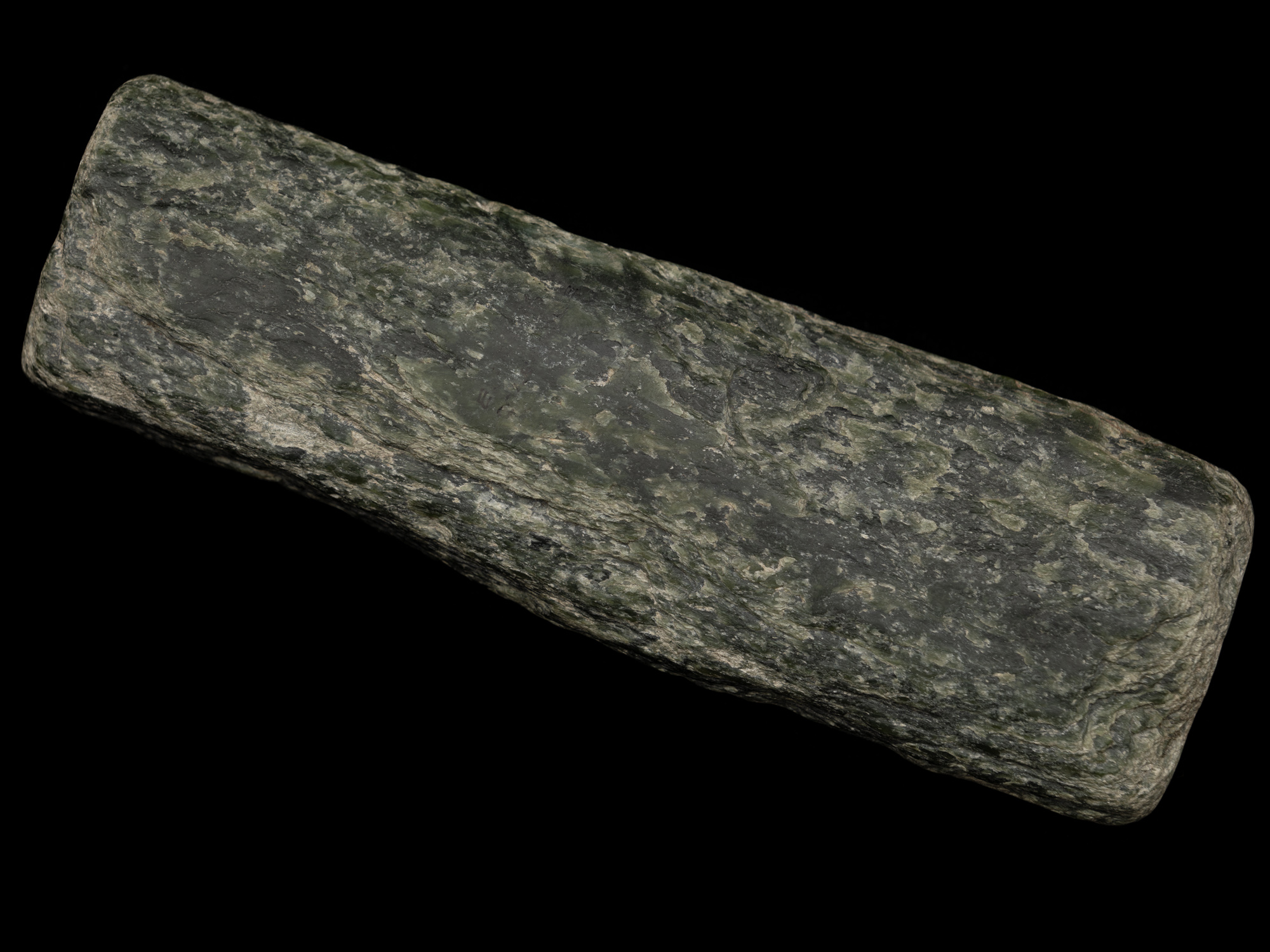
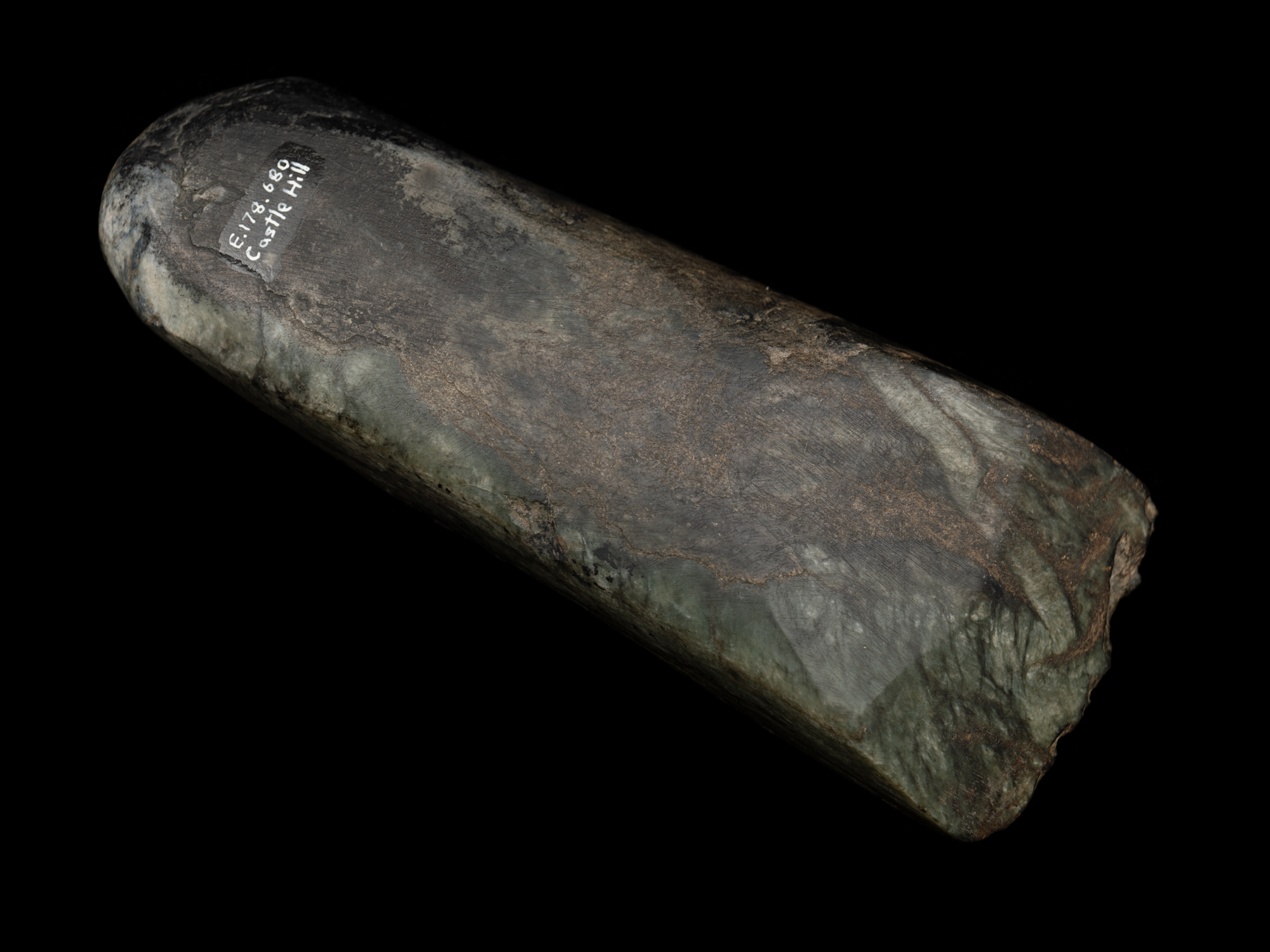
This toki was found around 1950 at Castle Hill. It was lying exposed on the threshold of a small tunnel-like cave on farmland. Its cutting edge was damaged by children after it was discovered. It also appears darker as it was caught in a house fire.
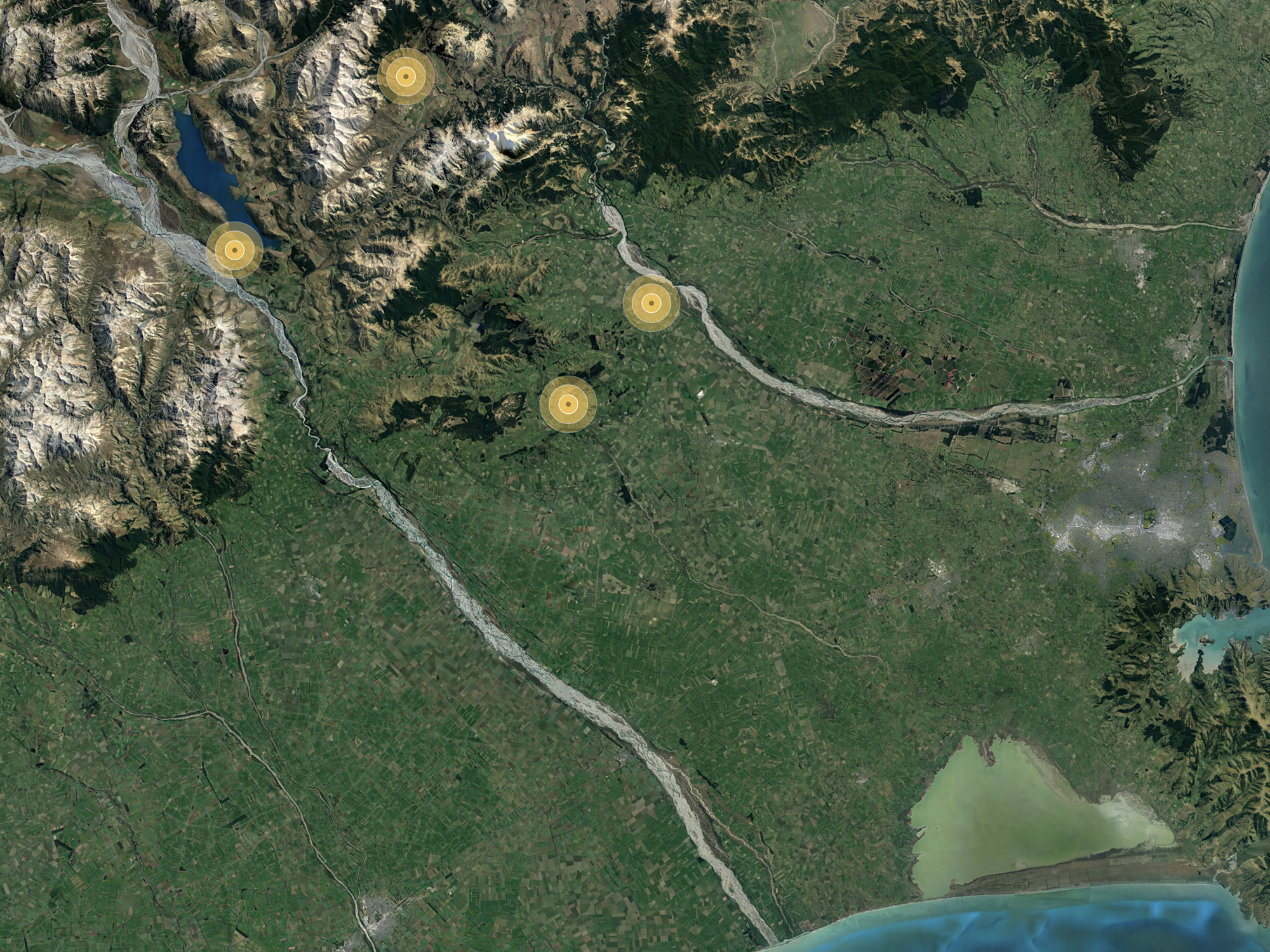
Map of the district indicating the areas where these toki were found.
Map data ©2021 Google
Pre-1500 toki found at Kura Tawhiti Castle Hill.
Canterbury Museum (E178.680)
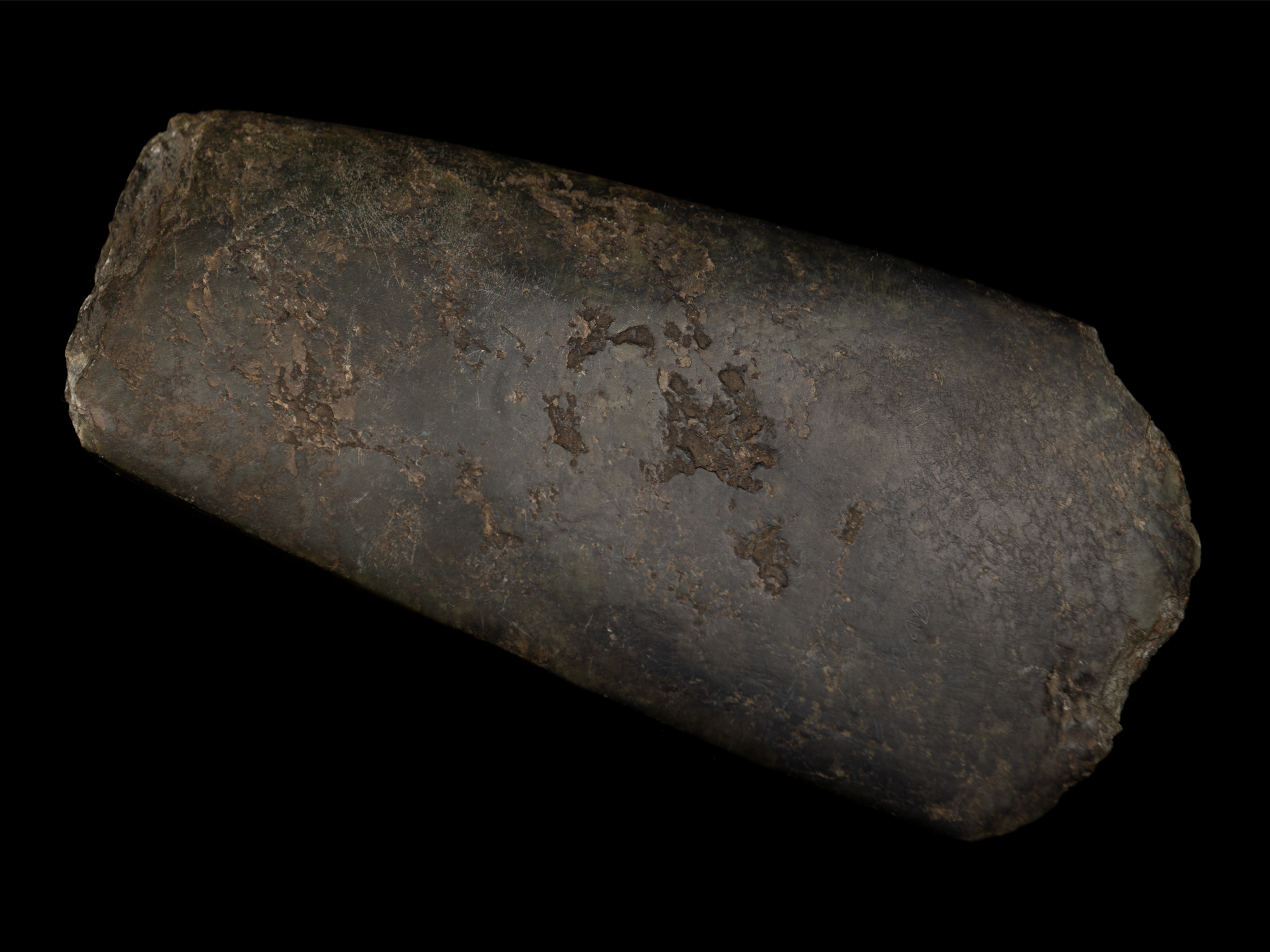
Pre-1500 toki blank found at Whakamatau Lake Coleridge, Selwyn District.
Canterbury Museum (E.122.16)
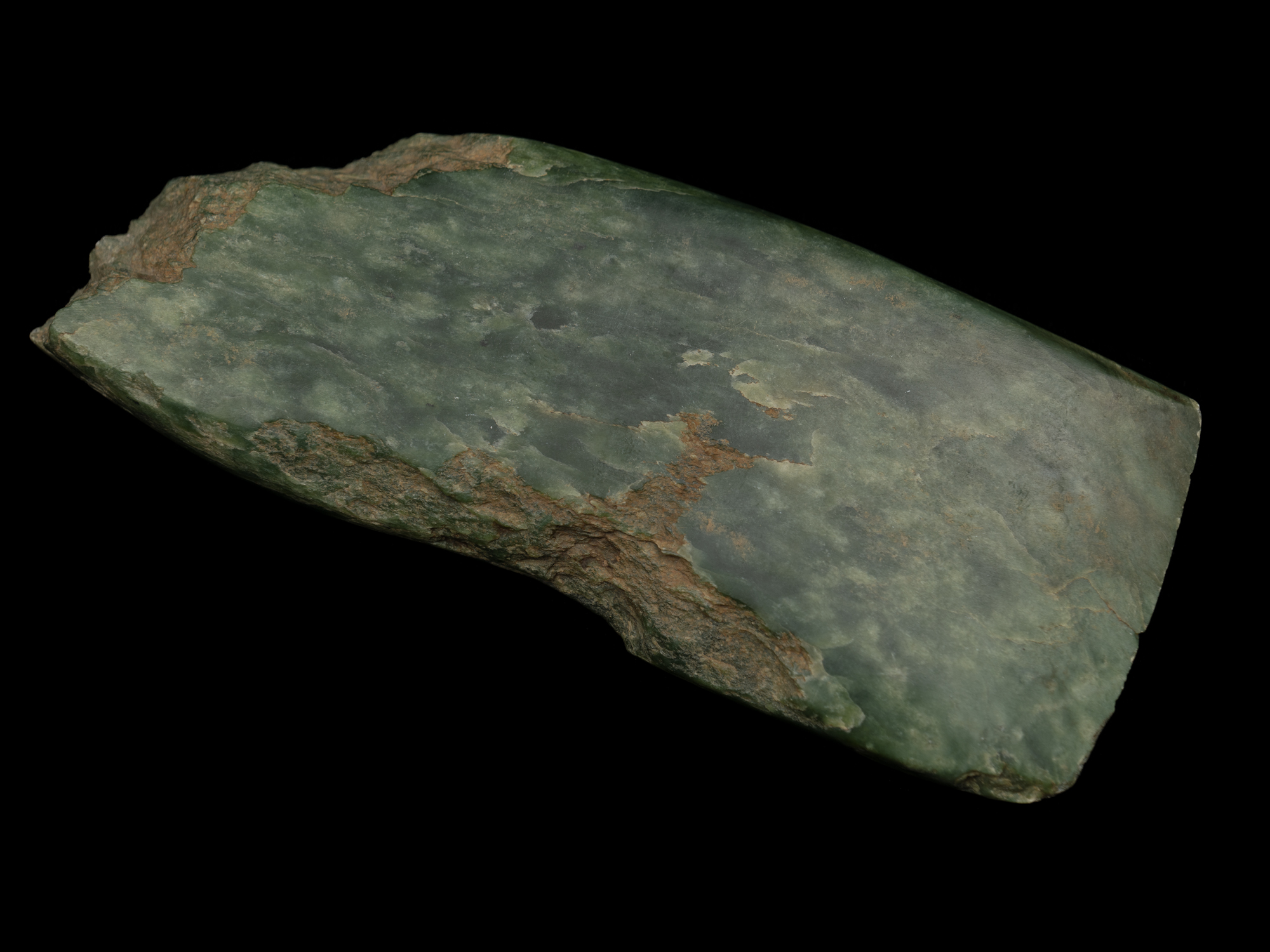
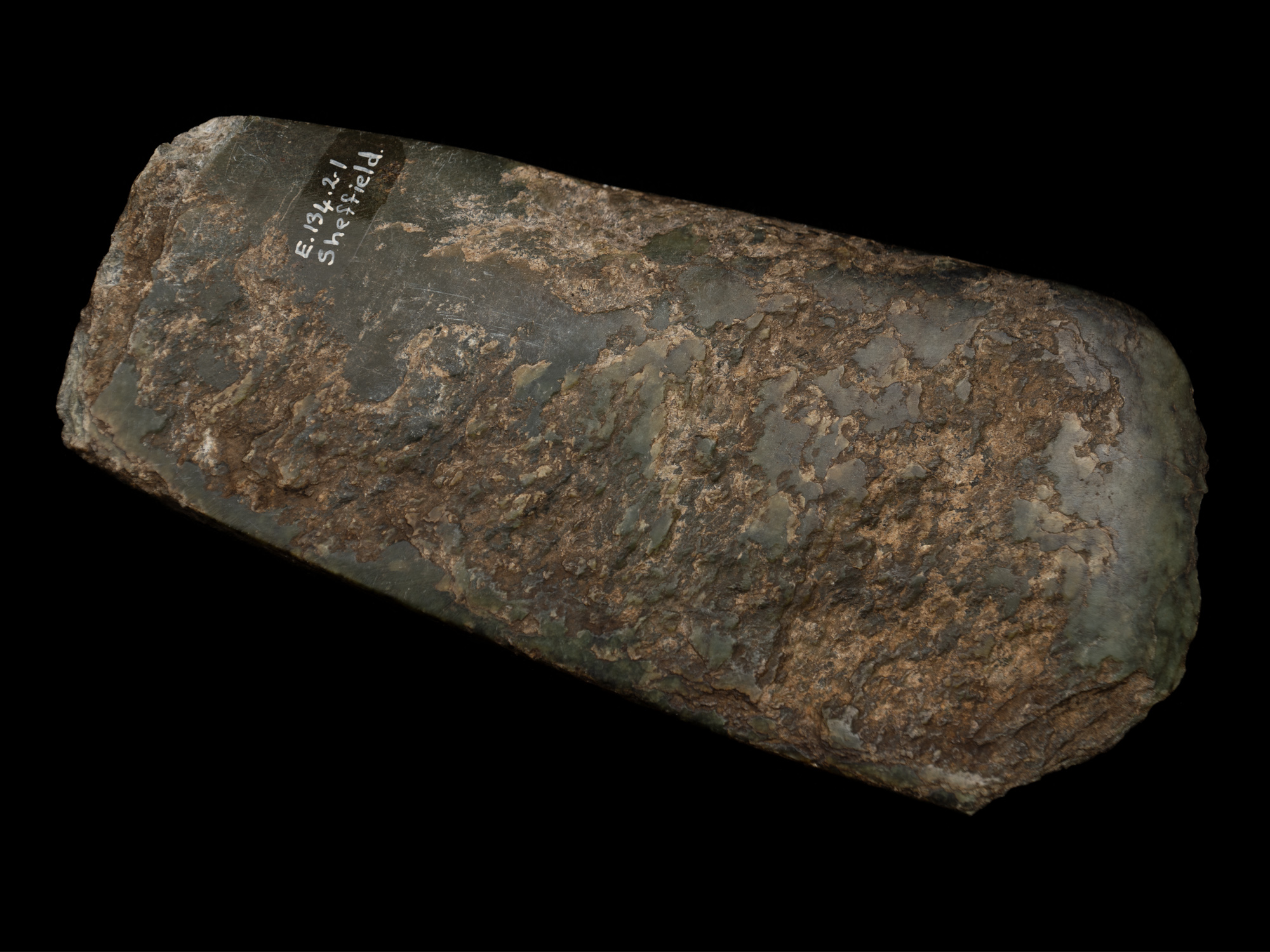
Pounamu toki dating from 1500–1700, found at Sheffield.
Canterbury Museum (E134.2.1)
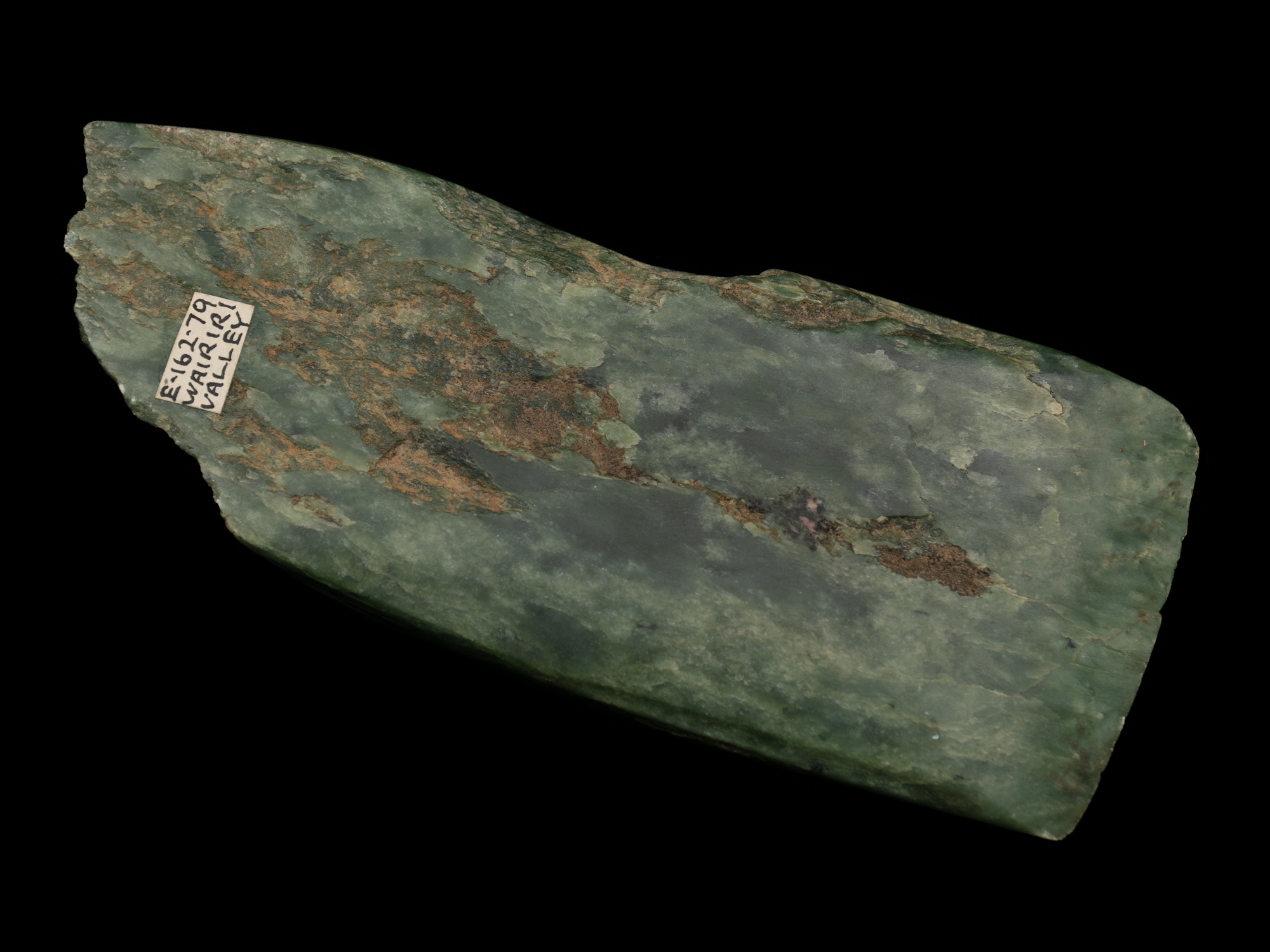
Pounamu toki dating from 1500–1700, found in Wairiri Valley near Glentunnel.
Canterbury Museum (E162.79)
E kitea māoritia ana te pounamu i te hauāuru me te toka o te Tai Poutini anake. Ekari nā kā mahi hokohoko i tae atu tēnei momo kōhatu, e tino matapoporetia ana mō te ātaahua me te pakaritaka, ki kā tōpito e whā o Aotearoa.
E ai ki kā kōrero nā Raureka nō Ngāti Wairangi i tīmata te ara hokohoko mō te pounamu mai i te Tai Poutini ki te Tai o Marokura mā kā mauka teitei. Kei te whakamauharatia ia i roto i te ikoa o Nōti Raureka.
I kitea ēnei toki e toru me te haka pūhukahuka o tētahi toki i kā wāhi rerekē i waiho ai i te Rohe o Waikirikiri. Ko te toki te taputapu tapahi mauroa a kā tīpuna. E tohu ana ia mata i te hia marama o te whakanaoka manawa rahi me te mārehe, e tārai ana, e whakaene ana ki te hōaka. Whakamahi tonu ai kā tohuka whakaairo i te toki pounamu i te taha o kā taputapu maitai.
Kei a Ngāi Tahu te mana kaitiaki o te pounamu, he rawa ohooho tou.
Kei te whakaaturia
Toki found at Castle Hill, Selwyn District
Toki blank found at Whakamatau Lake Coleridge, Selwyn District
Toki found at Sheffield, Selwyn District
Toki found near Glentunnel, Selwyn District
On loan from Canterbury Museum (E178.680; E122.16; E134.2.1; E162.79)
Pounamu (greenstone) is found in nature only in the west and south of Te Waipounamu. But this stone, prized for its beauty and strength, has made its way by trade and travel to every part of Aotearoa.
Raureka of Ngāti Wairangi is recorded as pioneering the pounamu trade route from west coast to east across the high mountains. She is remembered in the name Nōti Raureka (Browning Pass).
These three toki (adzes) and the roughed-out toki blank were found where they’d been left in various places in the Selwyn District. Toki were the heavy-duty cutting tools of the ancestors. Each finished blade represents months of patient and painstaking manufacture, shaping and smoothing with hōaka (sandstone). Master carvers still use toki pounamu alongside metal tools.
Ngāi Tahu maintain kaitiakitanga, guardianship, over pounamu, which continues to be a treasured resource.
On display
Toki found at Castle Hill, Selwyn District
Toki blank found at Whakamatau Lake Coleridge, Selwyn District
Toki found at Sheffield, Selwyn District
Toki found near Glentunnel, Selwyn District
On loan from Canterbury Museum (E178.680; E122.16; E134.2.1; E162.79)
This toki was found around 1950 at Castle Hill. It was lying exposed on the threshold of a small tunnel-like cave on farmland. Its cutting edge was damaged by children after it was discovered. It also appears darker as it was caught in a house fire.
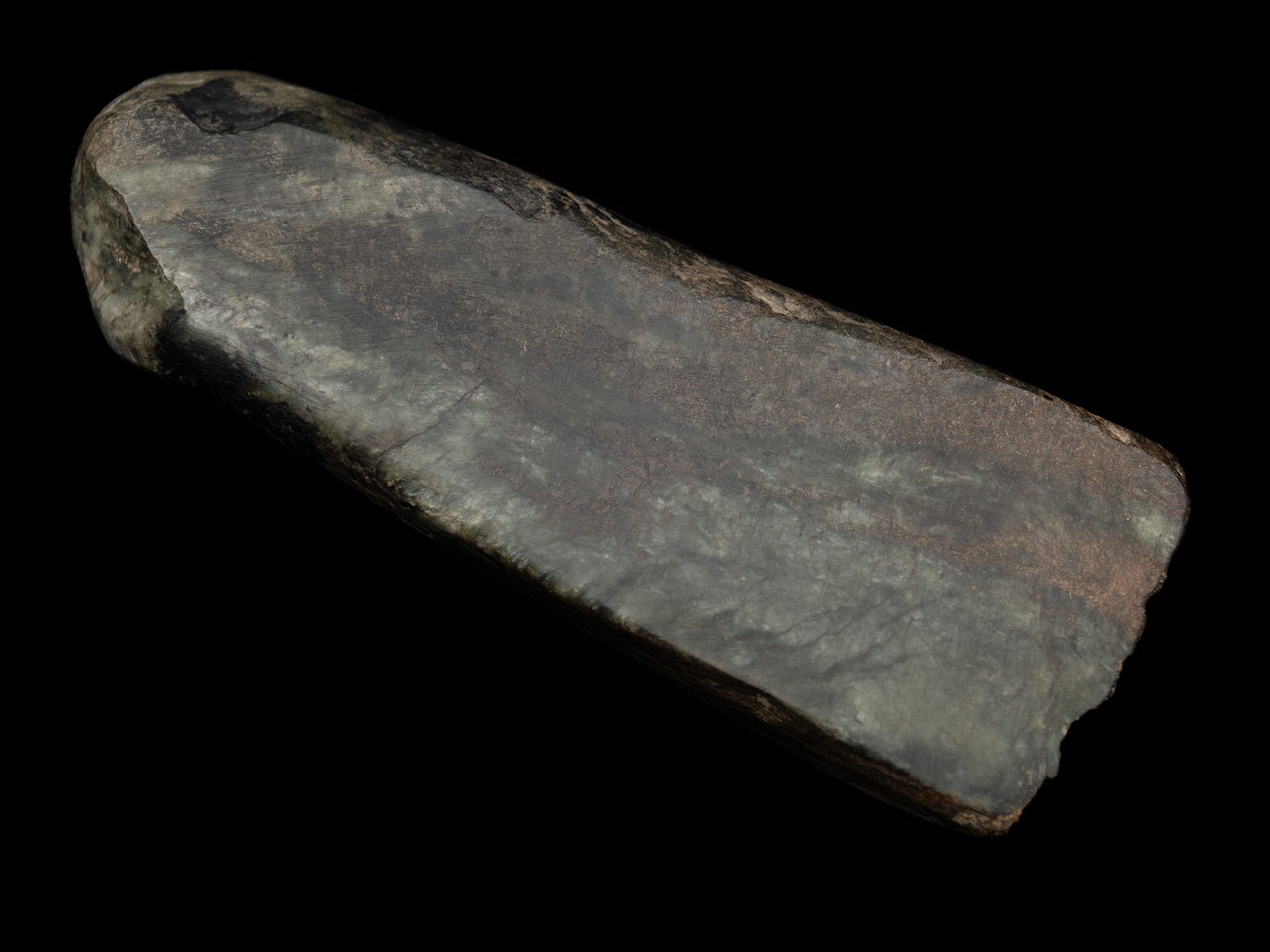
This toki was donated to Canterbury Museum in 1922. It was found at Whakamatau Lake Coleridge after it was exposed as a result of lowering lake levels. It is thought to be a blank brought to Canterbury from the West Coast, ready for manufacturing into a functional toki.
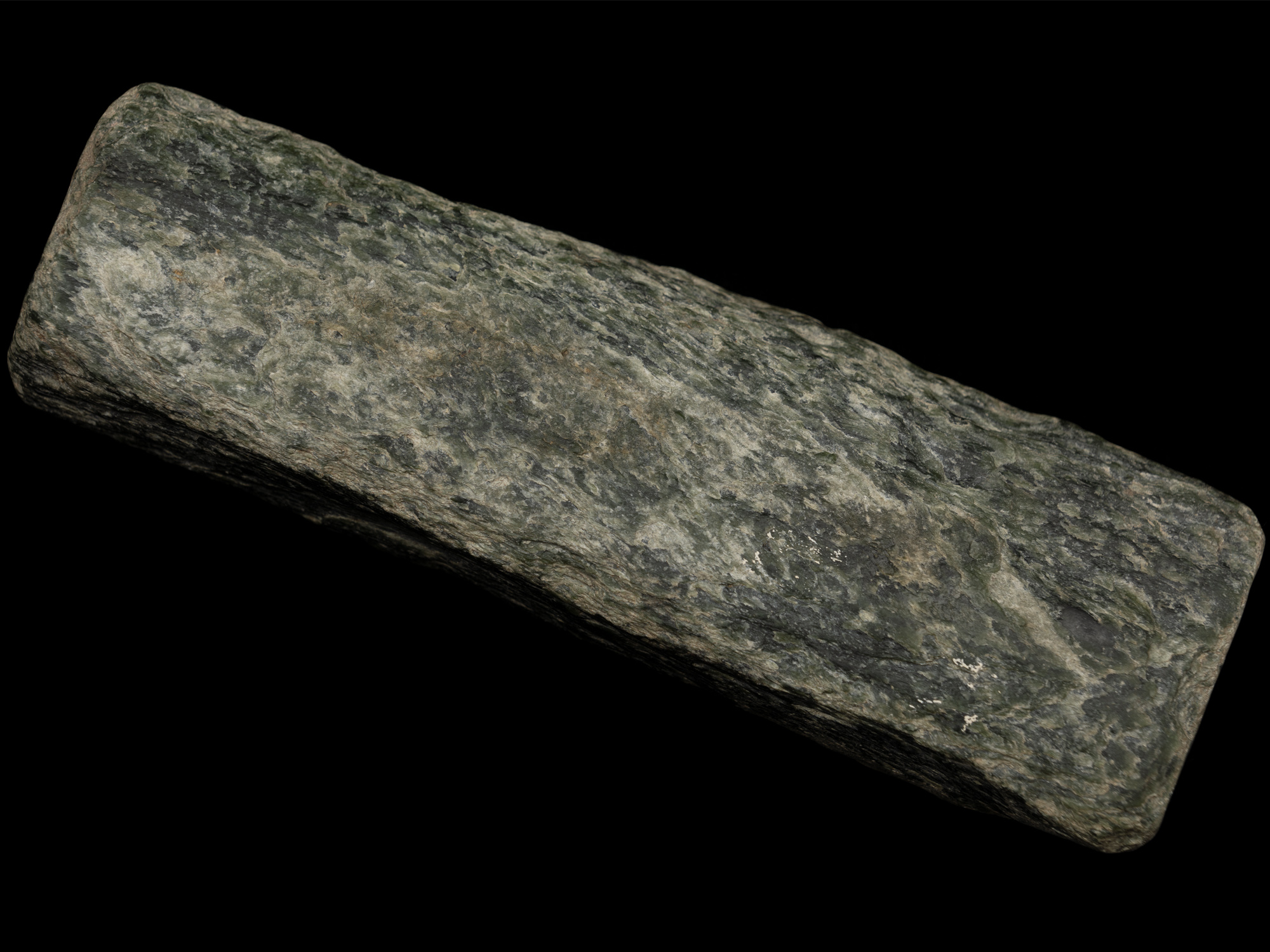
Pounamu is the Māori collective term for a semi-precious stone made of nephrite or semi-nephrite. It is also sometimes called New Zealand jade or greenstone.
Toki were often used to make waka, to cut down trees, and in building and carving. This toki was found at Sheffield and donated to the Canterbury Museum in 1934.
The grandson of European settlers in the district donated this toki to Canterbury Museum in 1962. It was found in the Wairiri Valley near Glentunnel. The donor believed that there was a route from Kaiapoi through the Wairiri Valley to Whakamatau Lake Coleridge, and from there over Nōti Raureka Browning Pass to the Hokitika River.