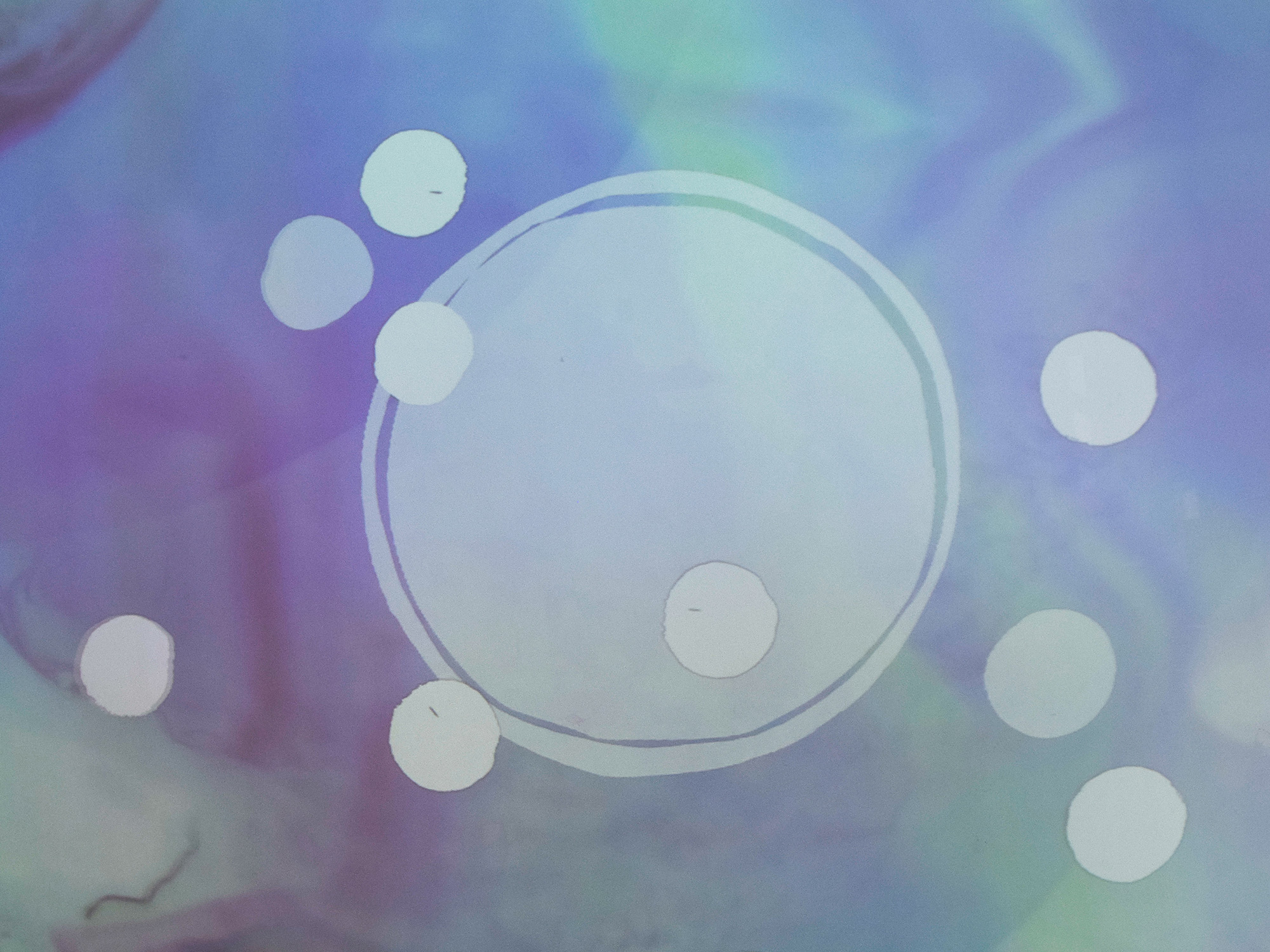
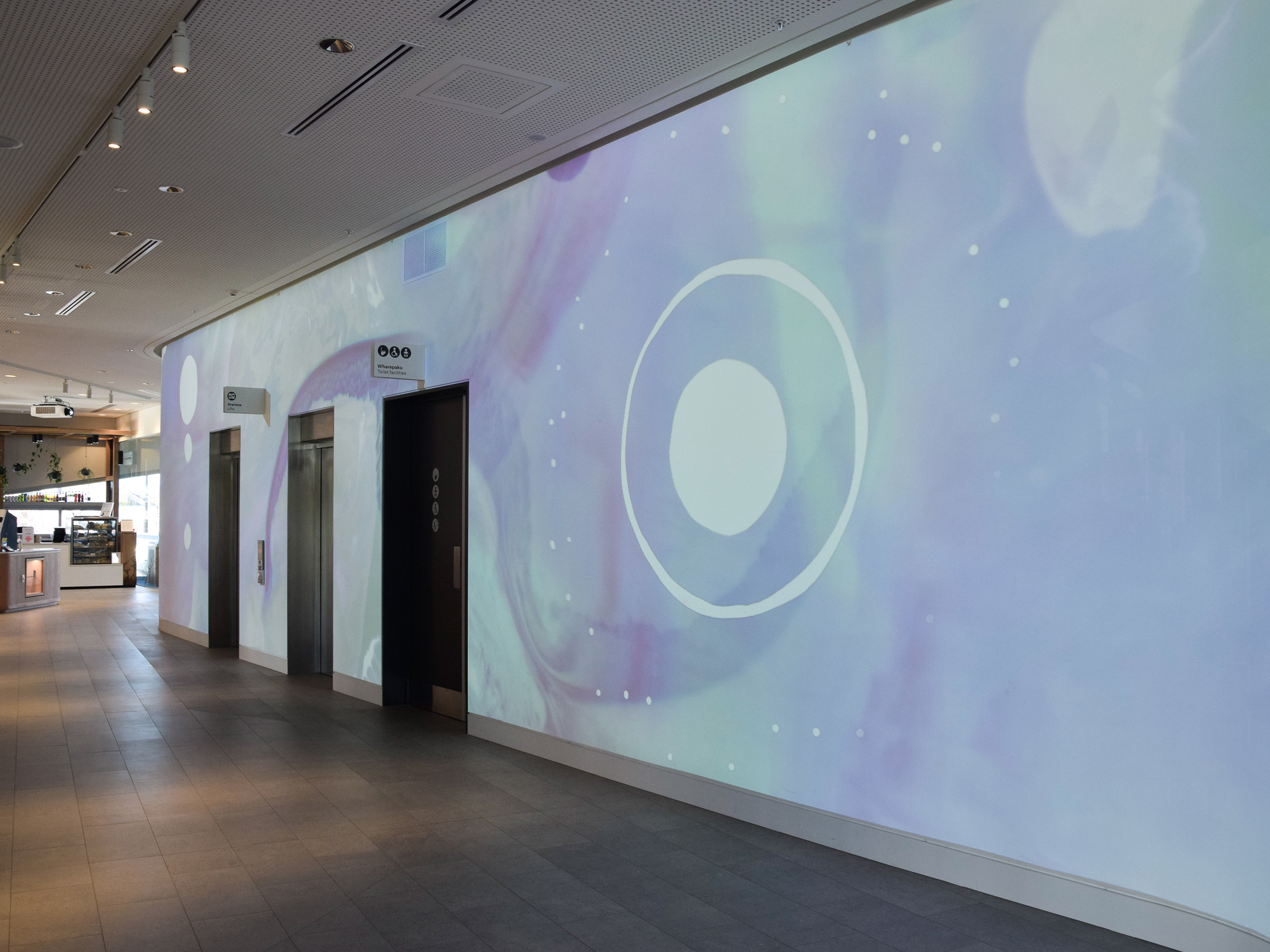
Image: Clara Wells, The Search and the Return (video still), 2022. Photo by Jennifer Partington.

Clara Wells, The Search and the Return, 2022. Photo by Jennifer Partington.

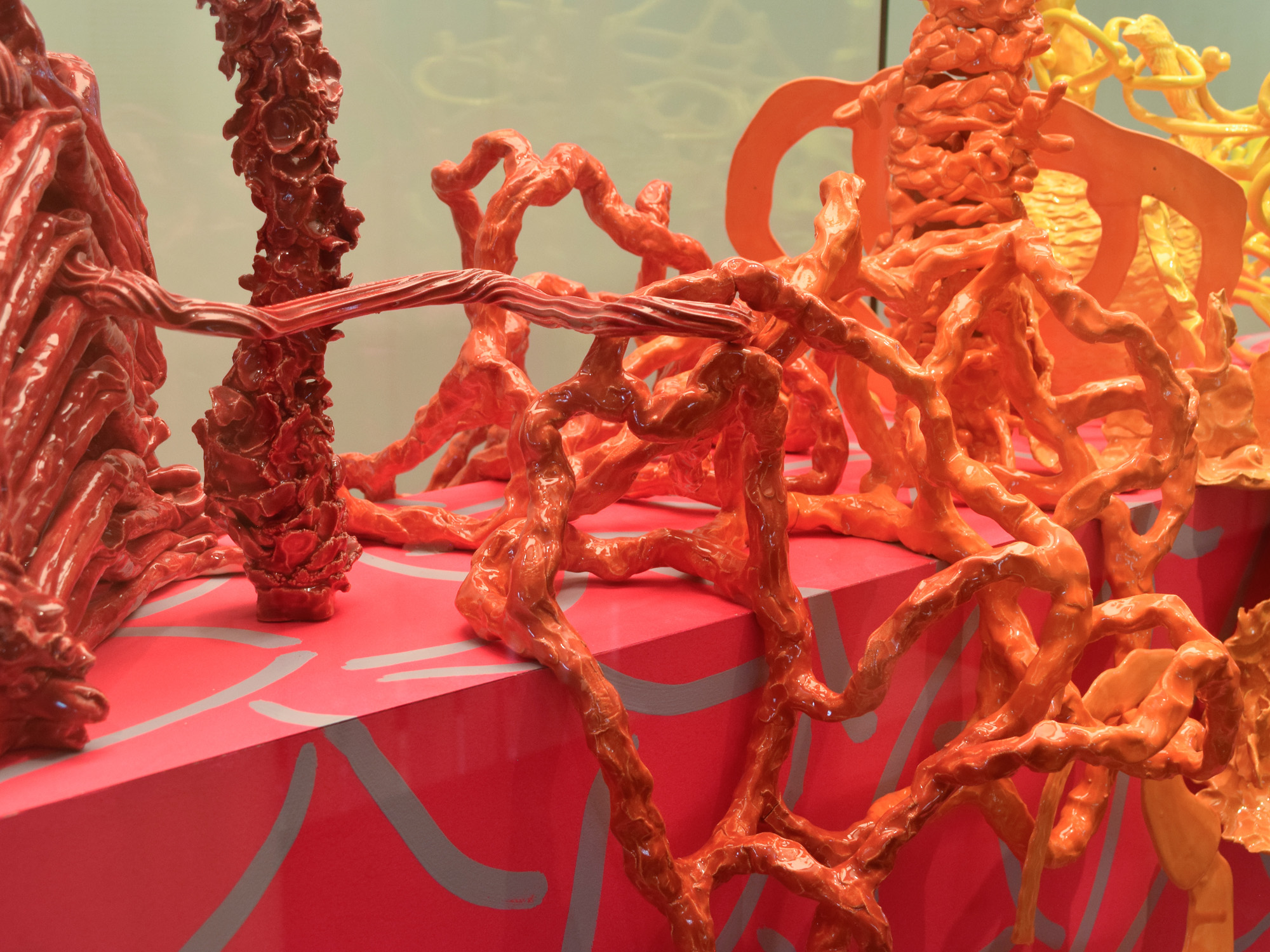
Janna van Hasselt, Chromacase (detail), 2022. Photo by Jennifer Partington.

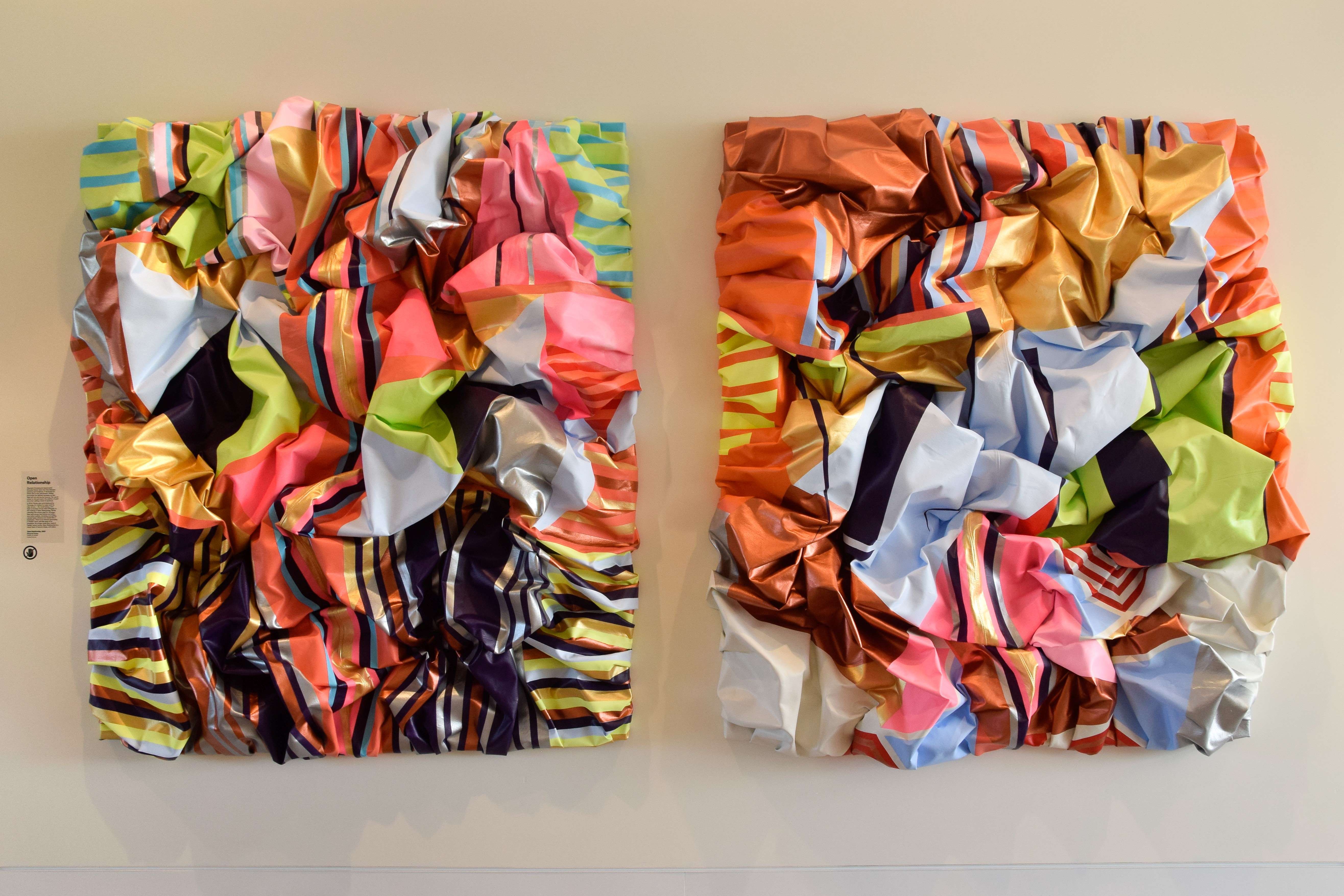
Miranda Parkes, Open Relationship, 2022. Photo by Jennifer Partington.

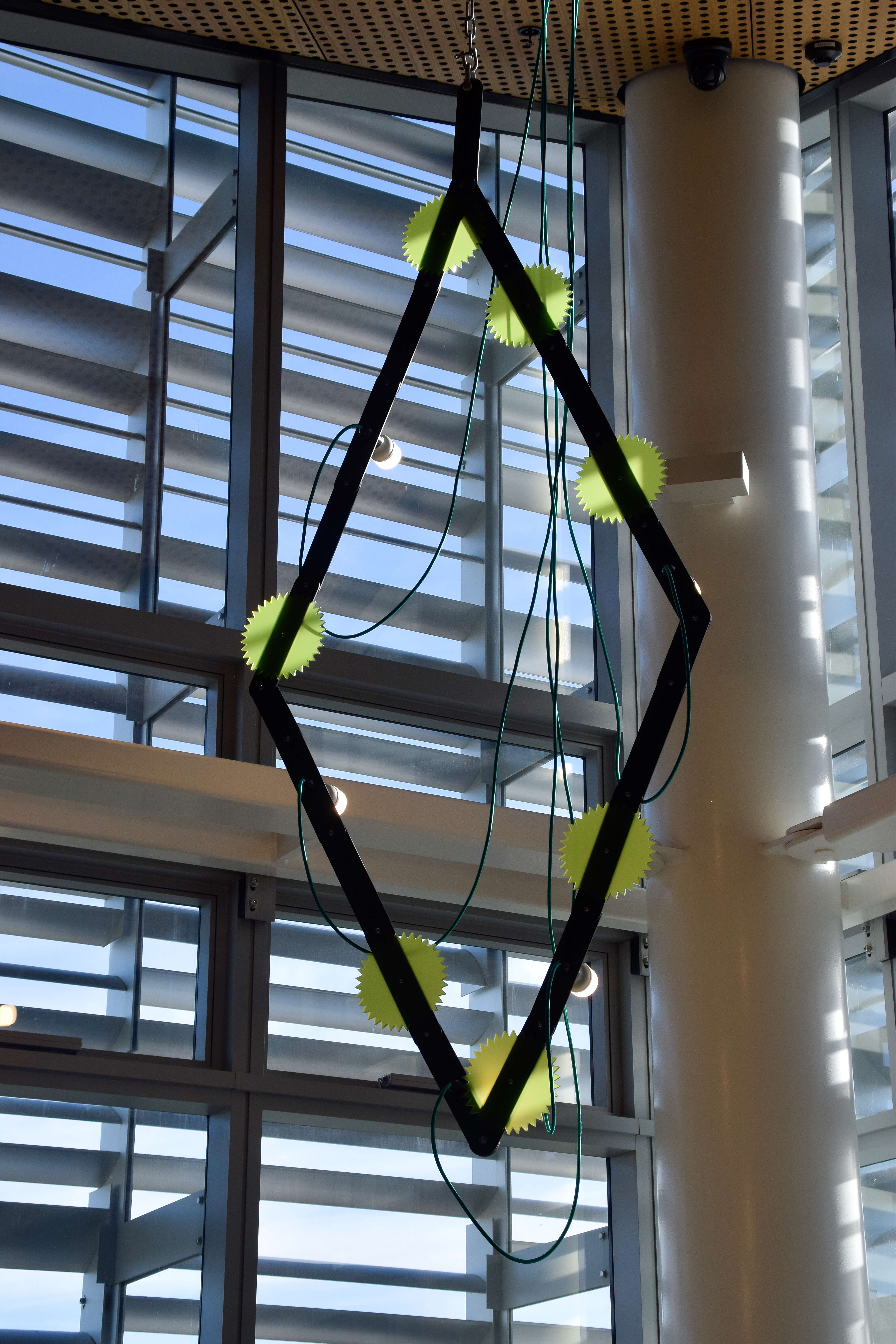
Turumeke Harrington, Hei Aho (Set Piece), 2022. Photo by Jennifer Partington.

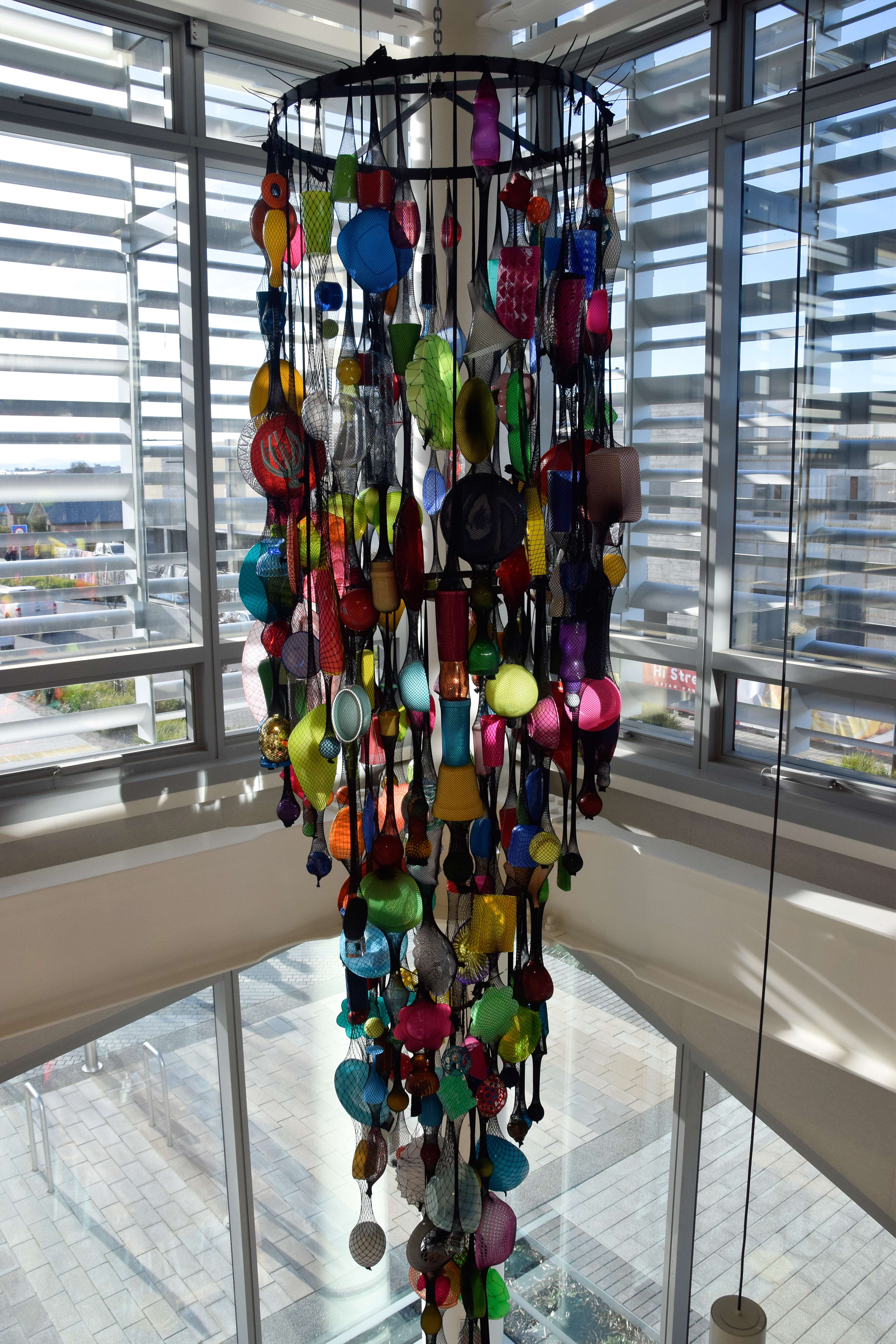
Judy Darragh, Lunge, 2022. Photo by Jennifer Partington.

Pahū!

Janna van Hasselt, Judy Darragh, Miranda Parkes, Turumeke Harrington, Clara Wells
14th July 2022 - 31st January 2023
Te Ara Ātea

Pahū! (to burst, explode, pop) is the second suite of artworks to be installed at Te Ara Ātea. In this exhibition five artists respond to the multi-use nature of Te Ara Ātea with an air of mischief and celebration. Visitors encounter works in unexpected places, as colour and form explode out from the wall, the ceiling, or the confines of glass cabinets. Works by Miranda Parkes, Janna Van Hasselt, and Judy Darragh celebrate colour and materiality. Canvas and clay take on organic, bodily forms redefining traditional understandings of painting and ceramics. Loaned from the Lincoln University Collection, Darragh’s Fluorescent Jellies (1996) sprout from the wall. A new commission from Darragh, Lunge, hangs from the ceiling in the Community Lounge. This strange chandelier forms a drooping silhouette with a collection of recycled plastics threatening to burst through the strained material.

Clara Wells and Turumeke Harrington have responded directly to this site in the development of their new works. Wells’ work spans 20 metres of curved wall from the main entrance. Animated digitally and by hand, organic forms swim and swell across an ethereal background. Informed by Ngāi te Ruahikihiki cultural narratives and taonga species (such as pātiki (flounder) and tī kōuka (cabbage tree)), Harrington’s work Hei Aho acts as place marker. Like the tī kōuka tree was used by her Ngāi Tahu tīpuna for wayfinding across the Canterbury plains, Harrington’s work is a glowing beacon in the first floor window of Te Ara Ātea.

Clara Wells, The Search and the Return, 2022

The Search and the Return, 2022
Clara Wells
Digital Video

Ōtautahi Christchurch-based artist Clara Wells is an experimental filmmaker, who uses traditional animation techniques of scratch-film, direct animation, and hand drawn animation. Inspired by the work of Len Lye, these are often combined with abstract and distorted sequences of digital live-action to produce imagery that quivers, flickers, and dances. With the unique opportunity to make a work specifically for the Te Ara Ātea projection wall, a challenging and unusual site, Wells has taken into account the ebb and flow of visitors, changes in light, and scale of the building.

In The Search and the Return circular forms move against a lava lamp-like background. The work is loosely divided into two sections: ‘the search’, during which the forms grow and move in the act of searching, and ‘the return', during which they come back together to share information in an act of exchange. This abstract narrative references Wells’ interest in visual communication and language, highlighting the value of gathering and sharing information within communities.

Janna van Hasselt, Chromacase, 2022

Chromacase, 2022
Janna van Hasselt
Glazed porcelain and acrylic
Courtesy of the artist

Janna van Hasselt is an Ōtautahi Christchurch-based artist who explores the endless formal possibilities of clay through her work. Her stacked, slumping and curling sculptures appear at the same time both solid and malleable. The precariousness of their construction and installation suggests imminent movement or collapse, as they bulge and sag over the edges of their plinths. They are temptingly tactile, but just out of reach.

Within these twisted forms, the artist’s process is made visible, the imprint of her fingers and hands evident in the final objects. Van Hasselt’s process is not only tactile but also unpredictable due to the nature of firing ceramics. However, she welcomes the uncertainty, allowing mistakes to create room for alternative ideas and forms to emerge.

Miranda Parkes. Open Relationship, 2022

Open Relationship, 2022
Miranda Parkes
Acrylic on canvas
Courtesy of the artist

Ōtautahi Christchurch-based artist Miranda Parkes blurs the lines between painting and sculpture. A technique for which she is now well-known, Parkes scrunches her painted canvases so that they puff out and slump inwards. Her use of colour is rich and joyful, the addition of gold and silver adding a level of opulence.

In 2014, Parkes was commissioned by Tauranga Art Gallery to make work for their atrium — the result being a 14m-high scrunched canvas titled Whopper. In the making of Open Relationship, Parkes reworked the canvas used for Whopper. Now split across two frames and with a new colour palette, slumping and puffing canvas layers advance and recede like a landscape. There is an inherent generosity in Parkes’ paintings, and this work is no exception. At a larger scale than most of Parkes’ recent works, Open Relationship is a visual feast of texture, shape, and colour.

Turumeke Harrington, Hei Aho (set Piece), 2022

Hei Aho (Set Piece), 2022
Turumeke Harrington
Mixed media
Courtesy of the artist

Turumeke Harrington (Kāi Tahu, Rangitāne, Ngāti Toa Rangatira) is an Ōtautahi Christchurch-born artist living in Poneke Wellington. Hei Aho (Set Piece) is a suspended light installation inspired formally by the tī kōuka (cabbage tree) and pātiki (flounder). Both pātiki and tī kōuka have particular significance to mana whenua in this takiwā (district). Te Waihora (Lake Ellesmere) is an important mahika kai (food gathering) site, where pātiki have traditionally been plentiful. Likewise, tī kōuka, a recurring motif in Harrington’s work, was an important food source, medicine, weaving material, and wayfinder.

Harrington often brings layers of humour into her work, disrupting or critiquing conventional expectations of and engagement with contemporary art. In this way, she is also interested in tī kōuka as a symbol of ‘nuisance’, its fronds a well-known annoyance to gardeners and lawn mowers, and children assigned with the Sunday chore of picking them up.

The title Hei Aho (Set Piece) references adornment and whakapapa. Hei means to tie around the neck, and aho refers to lines of genealogy; cord or string; and light or to shine.

Judy Darragh, Lunge, 2022

Lunge, 2022
Judy Darragh
Mixed media
Courtesy of the artist

Renowned Ōtautahi Christchurch-born artist Judy Darragh repurposes found and recycled objects to create her bright and unconventional sculptures. Lunge has been redeveloped for Te Ara Ātea after its earlier inclusion in Competitive Plastics at Objectspace, Tāmaki Makaurau Auckland and the Centre of Contemporary Art Toi Moroki, Ōtautahi Christchurch. Colourful plastics are encased in stretchy netting and suspended from the ceiling.

Darragh’s use of recycled or discarded objects comments on the concept of ‘fine art’, instead elevating everyday, often overlooked items within a new context. Darragh gestures towards issues of capitalism and consumerism. From production, to consumption, to being left in second-hand stores, these objects have a hidden life- cycle that Darragh has disrupted and injected with new significance.