Piri Cowie, Te Hekenga, 2022. Bronze

Selwyn District Council Collection.

Piri Cowie, Te Hekenga, 2022

“I rongo ahau ki ngā kōrero a ngā tohunga Māori o mua mō tēnei ika mō Tuna…I heard the tales of the Māori experts of former times regarding this fish, Tuna (eel). According to the tohunga, Tuna was a person from the heavens and because of the heat there, and the aridness because of the lack of water, and because of the intense heat of the sun, he descended to this world…” Peti Hineiwetea, 1880

Te Hekenga

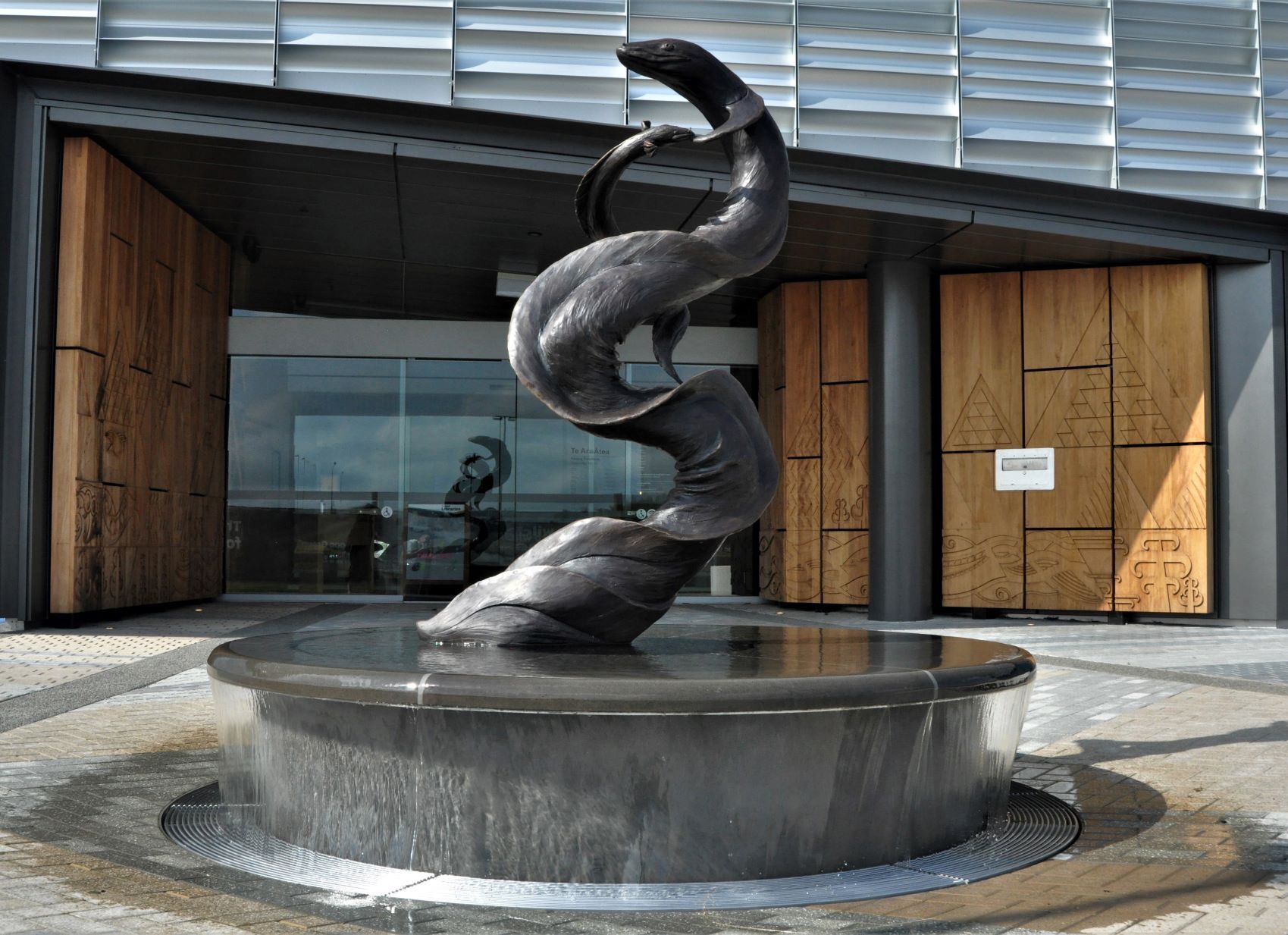
Taking pride of place in the western courtyard at Te Ara Ātea, Rolleston, Te Hekenga is a bronze sculpture created by Ngāi Tahu, Ngāpuhi, Ngāti Kahu artist Piri Cowie. Te Hekenga celebrates mahika kai and is a visual representation of the mauri of tuna. Originally sculpted in clay, the bronze depicts a pou tuna, parent and a punua tuna, a young eel.

The tuna tradition is one which has been passed down through the generations. It is recorded in various whānau and hapū manuscripts. The extract above, originally recorded in the 1880s by H K Taiaroa, tells the story of an entity called Tuna, his descent into the natural world and the creation of the conger eel and freshwater eels. It is easy to see from these early recordings, that eels were and still are an important mahika kai (food source) for Māori.

Inspired by the narratives of the kaitiaki (guardian) Tūterakiwhānoa, Te Hekenga recognises the significance of water and the abundance of natural resources traditionally found in this region. In particular, the name Te Hekenga, refers to the annual eel migration from our southern shores to the sub-tropic waters near Tonga, to spawn. Once hatched, the transparent leaf-shaped larvae float back on the sea currents to Aotearoa. Having the opportunity to bring her passion for the humble tuna to life in this work, has been an honour for artist Piri Cowie. “The central theme for Te Hekenga is mahika kai. Tuna or hao are a taoka species, a delicacy highly valued within Ngāi Tahu. Our traditions speak of tuna originating from the realms of the atua gods. There are a multitude of names recorded that describe and define tuna. This demonstrates how precious these taoka are to us. Te Hekenga brings with it layers of meaning and symbolism. It celebrates the guardians of waterways and the source of our sustenance. He koha tēnei, he taoka tuku iho nō mua rā anō, hei paika mō te iwi – a gift passed down through the generations for the wellbeing of our people.”

P M Parata-Goodall

April 2022

Unveiling Te Hekenga

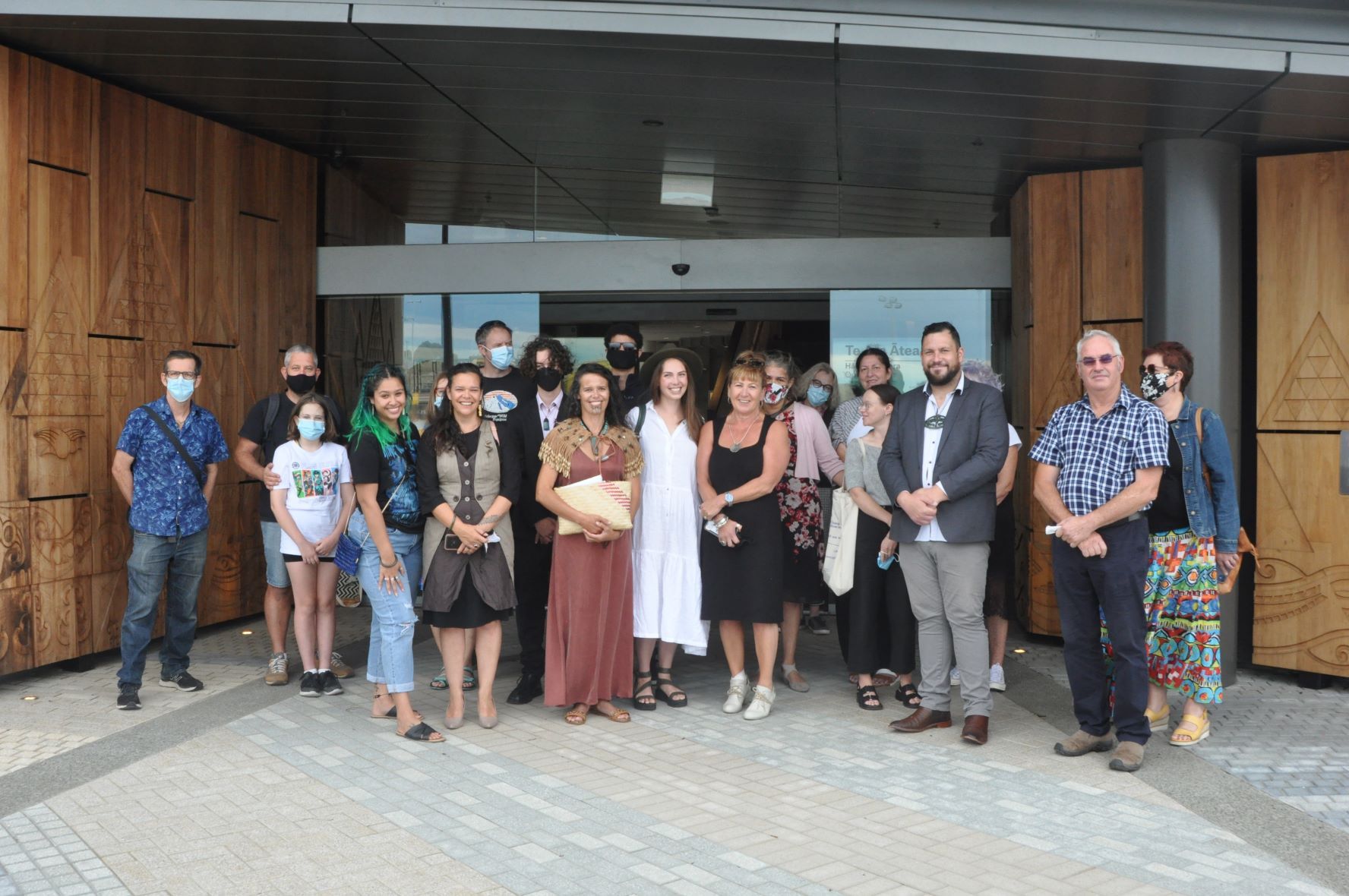
Te Hekenga was unveiled on Saturday 19 February 2022. The ceremony led by Corban Te Aika and Puamiria Parata-Goodall on behalf of Ngāi Te Ruahikihiki ki Taumutu, was attended by Piri Cowie and whānau, Ngāi Te Ruahikihiki and staff of Selwyn District Council.

He Kōrero nā te Ringarehe - Artist Statement

Te Hekenga, mō tātou, ā, mō kā uri a muri ake nei
Tū tonu, tū tonu, e te pou tuna
Te Hekenga, ki te rohe o Ngāi Te Ruahikihiki,
E tau, e tau, e tau e.

Te Hekenga rises from the wai, uplifting our cultural narrative and stands as a kaitiaki for Te Ara Ātea. Inspired by the pūrākau of our tipua Tūterakiwhanoa, who travelled through the underground waterways in this rohe and lived in Te Waihora and the Rakaia. Te Hekenga has multiple layers of meaning and symbolism. It offers a physical representation of mauri, bringing attention to our collective responsibilities of kaitiakitaka, caring for our wai and te taiao, for our future generations. He taoka te wai – our water is a treasure.

The Aramoana paving pattern forms the tūāpapa for Te Hekenga. Aramoana, means pathway to the sea, it acknowledges the migration of tuna in our Pacific Ocean and reminds us of our ocean voyaging traditions and history.

The central kaupapa reflected in Te Hekenga is mahika kai, the celebration of food and natural resources. Tuna or hao, otherwise known as eels, are a taoka species, a delicacy, which are highly valued within Ngāi Tahu and Māori culture. Our cultural narratives speak of hao originating from the realms of our atua, the heavens. Our tīpuna used a multitude of names to describe and define hao, which demonstrates how precious they are to Ngāi Tahu. Hao have lived in our waterways for 23 million years. Longfin eels are endemic to Aotearoa.

Mahika kai speaks of our Ngāi Tahu connections with our traditional kai and other natural resources, the places those resources are gathered and the way they were gathered. Living by the maramataka, the Māori lunar calendar, was the way of life for our tīpuna. By engaging in mahika kai, the cultural practices of our tīpuna, intergenerational indigenous mātauraka, continue to be shared between generations. Mahika kai also builds, whanaukataka kinship relationships, weaving our whānau, hapū and iwi together, naturally creating a sense of pride from actively participating in the cultural activities that have sustained our people for generations in Te Waipounamu.

Within Te Hekenga, tuākana tāina relationships are represented, punua tuna elvers are visible in the ōnewa bluestone base, with the larger pou tuna creating the foundation for the taina, the young one, to take flight. Kia rere ki te ao! Hao are migratory ika. During February and March, the ‘heke’ begins. The hao migrate near the coast of Tonga to spawn and then journey back on the ocean currents to Te Waipounamu and Aotearoa. Symbolically, Te Hekenga represents the migration of people to Rolleston and their settlement here.

He koha a Te Hekenga
He taoka nō mua rā anō
Hei paika mō te iwi.

Te Hekenga is a gift
A precious gift passed down through the generations
For the wellbeing of our people.

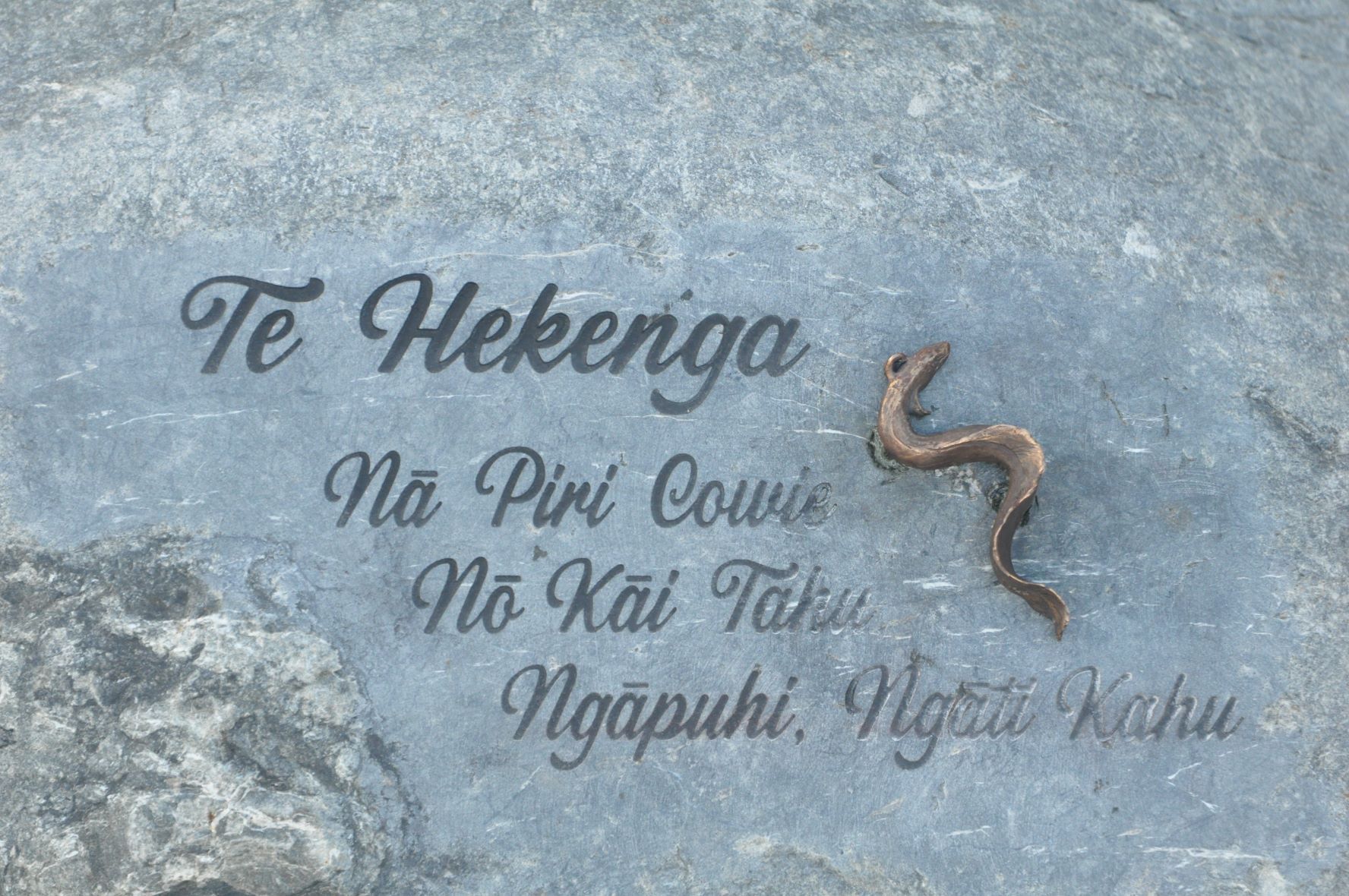
Nā Piri Cowie
Nō Ngāi Tahu, Ngāpuhi, Ngāti Kahu
11 November 2021

NB Ngāi Tahu dialect, that is the use of the ‘k’ instead of the ‘ng’, is used throughout this text. The exception are proper nouns, these retain their own dialect.

Glossary

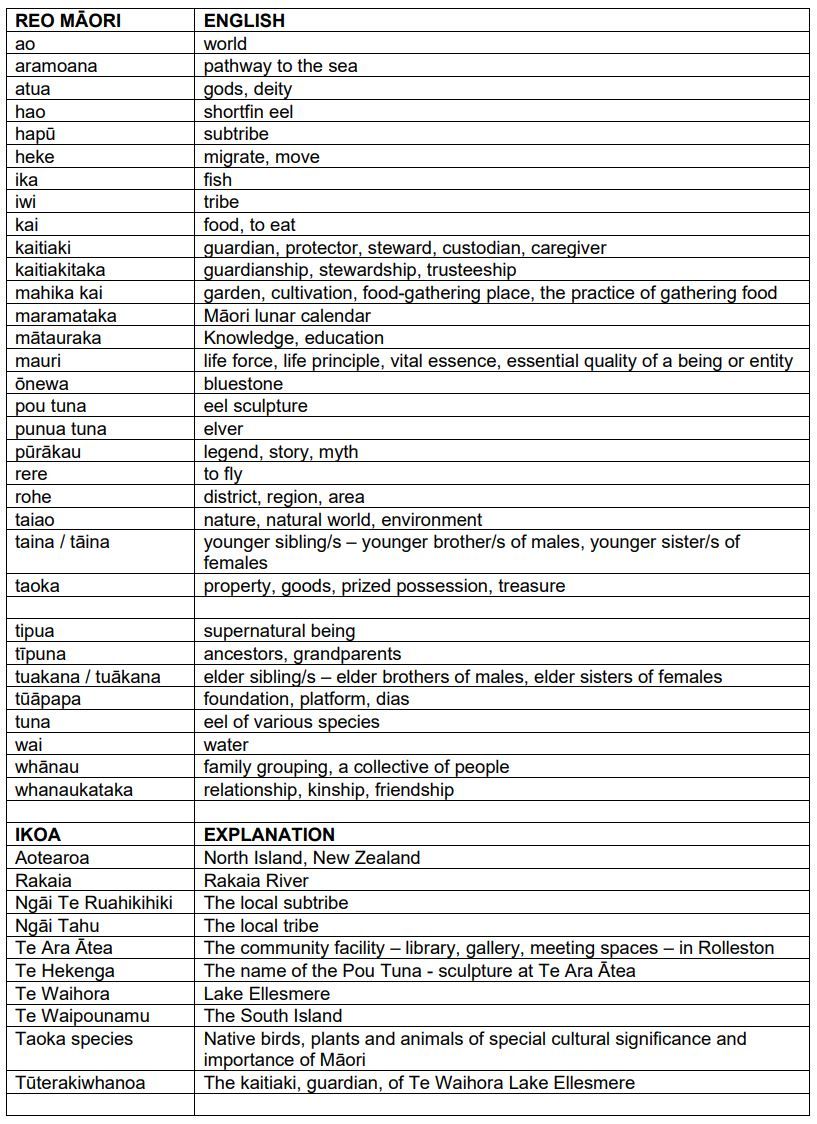
This is a glossary of te reo Māori words and terms used on the preceding pages.